Symptoms of Talc-Related Cancer: What to Watch For
There is doubt on the safety of talcum powder, it is crucial to recognize early warning signs of talc-related cancers such as ovarian and lung cancer.

Seriously, think about this for a moment. Think about the dynamic in a THIS vs THAT situation.
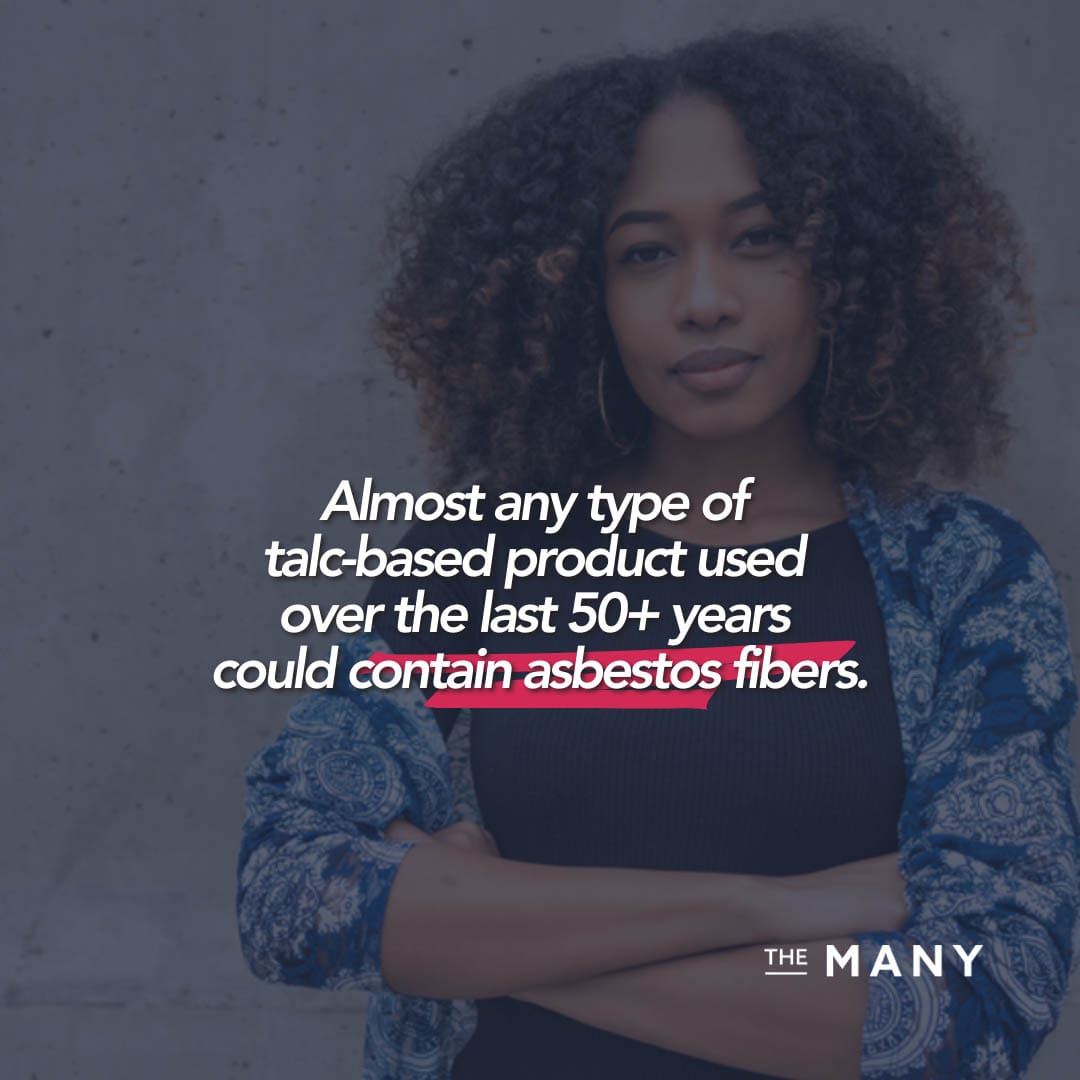
Know this. There is no safe level of asbestos. It’s simply not safe. Meaning… sure – some people may go all day and make comments like “oh… I used to use that baby powder… and look at me – I’m fine…”
The big issue is – everyone is DIFFERENT… and for some people, they may have a stronger immune system with a greater capacity to fight off a problem within the body.
Asbestos is the type of carcinogen that you can think of as a “slow kill”… for some people, if there is already an issue within the body – do you think pouring some asbestos on it – is going to be helpful?
Below is a quick rundown of the key points of what you are going to learn… HOWEVER – there is so much more… enough that by the time you’re done reading – you’re going to plaster your social media with 1 or all 27 of the images we’ve created for you on this page to do – precisely that.
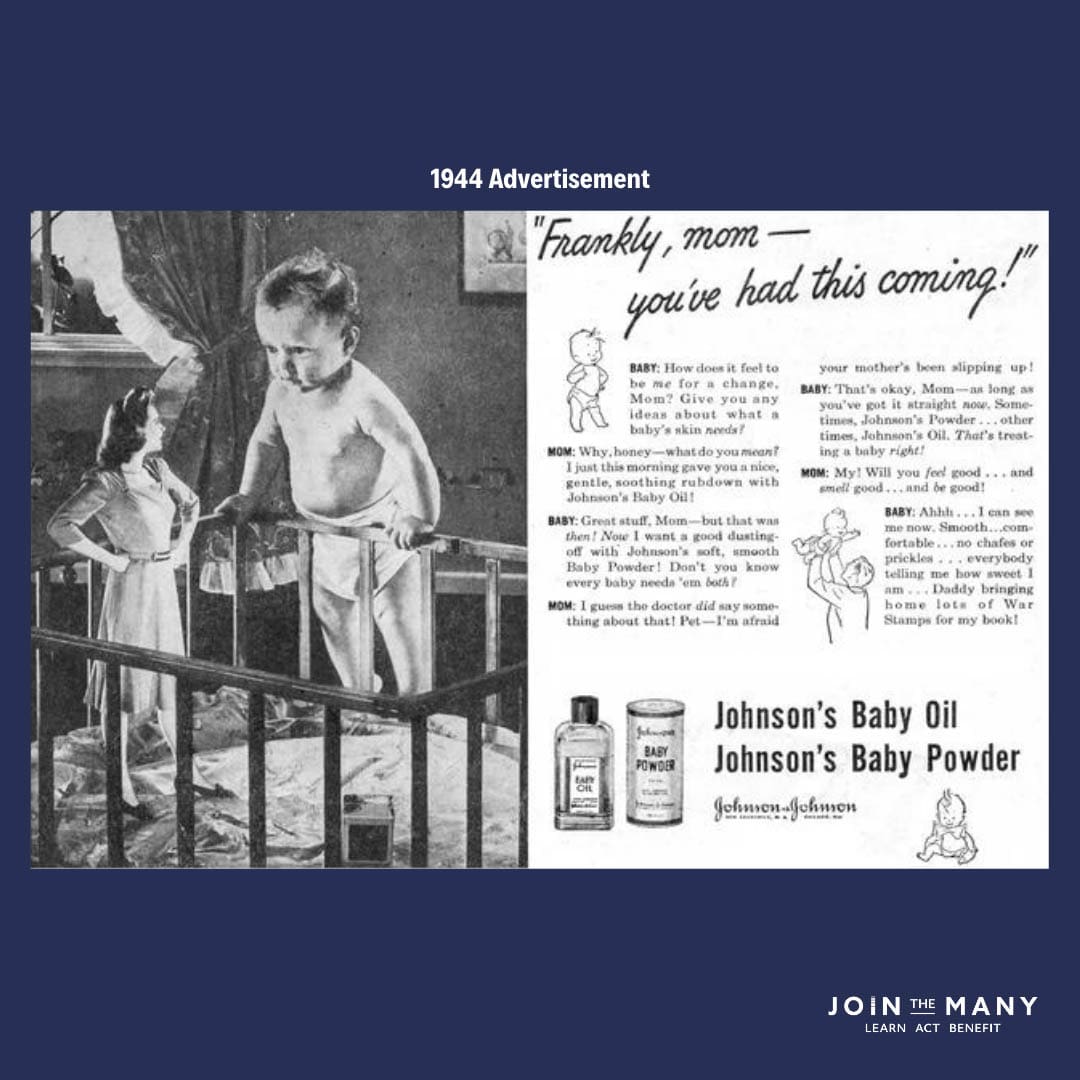
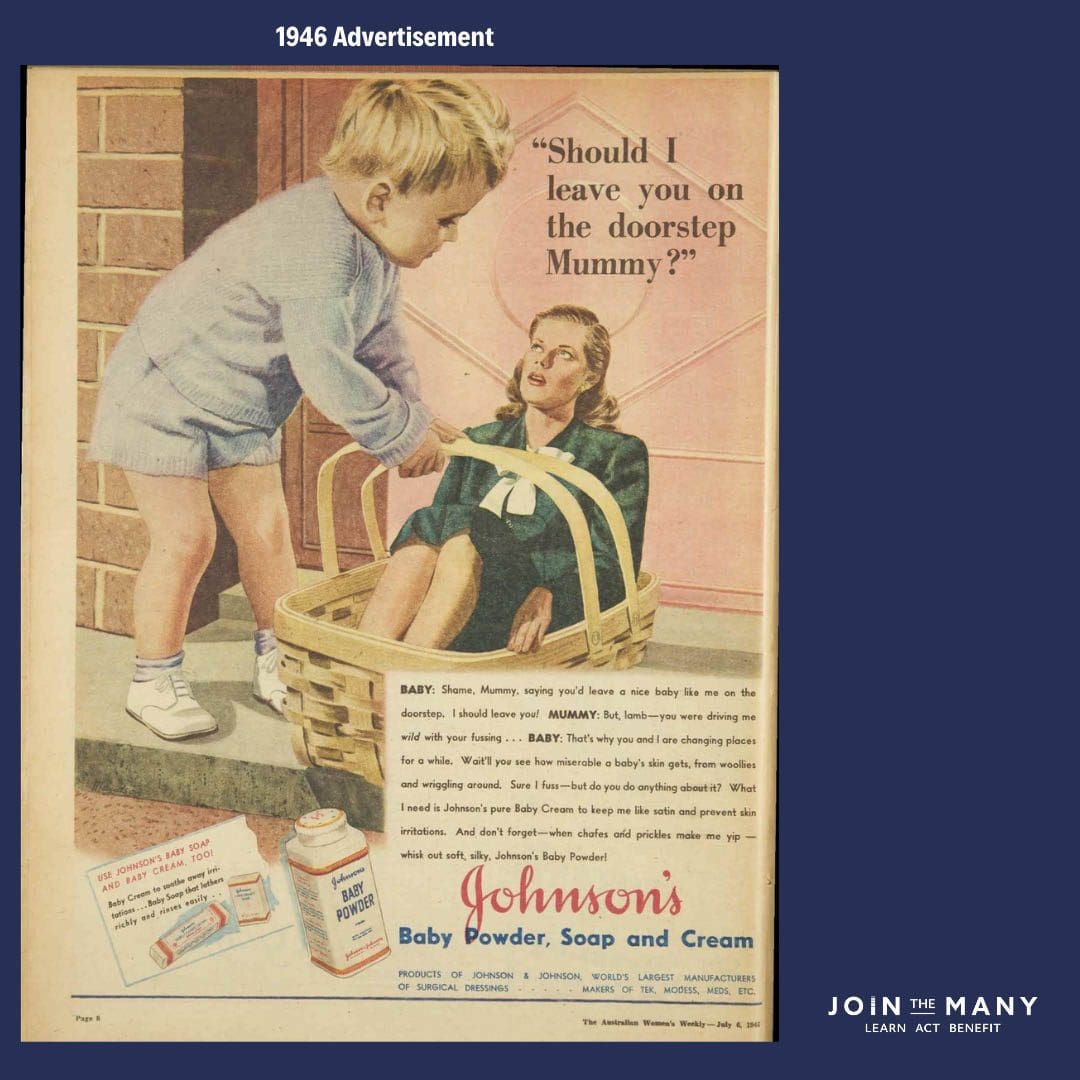
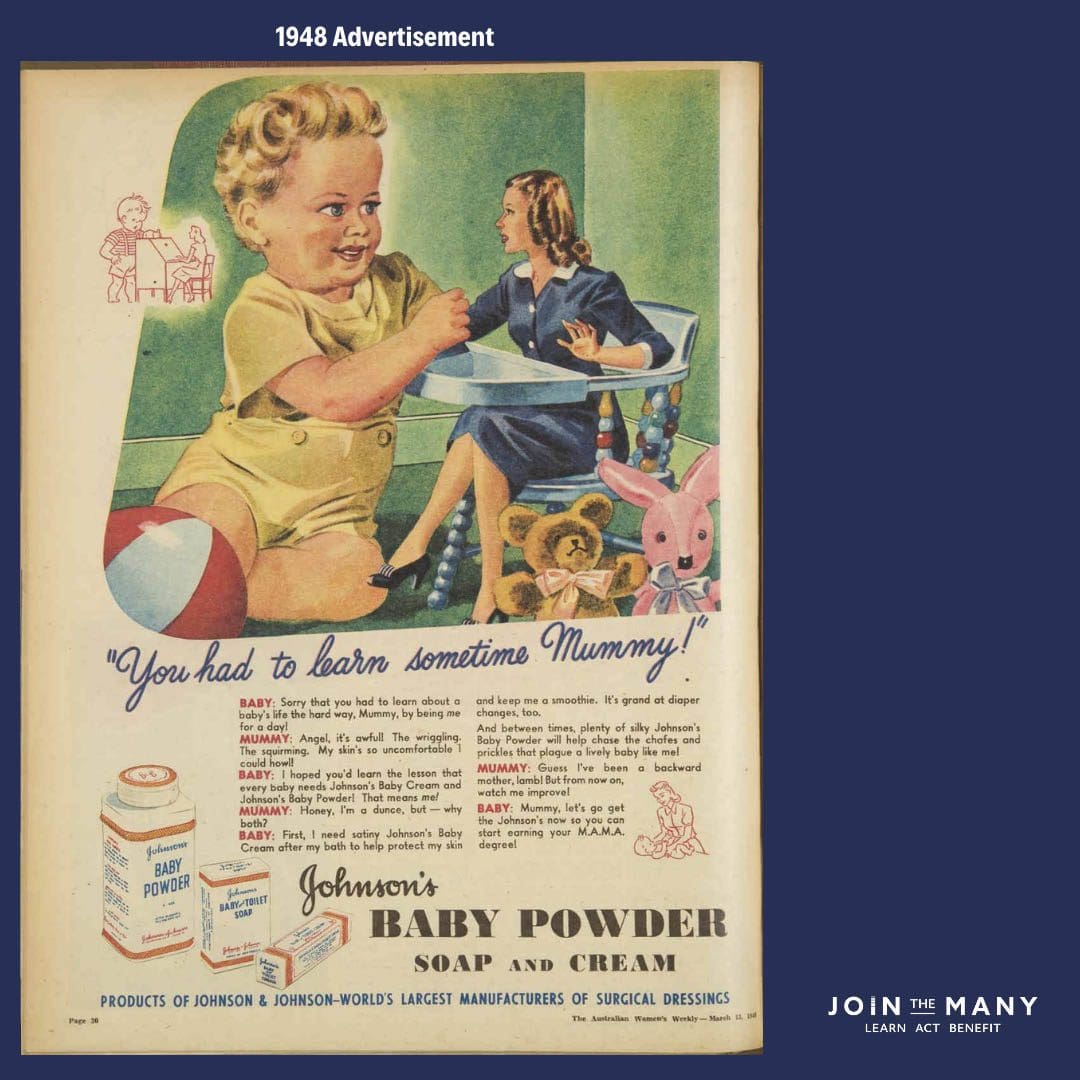
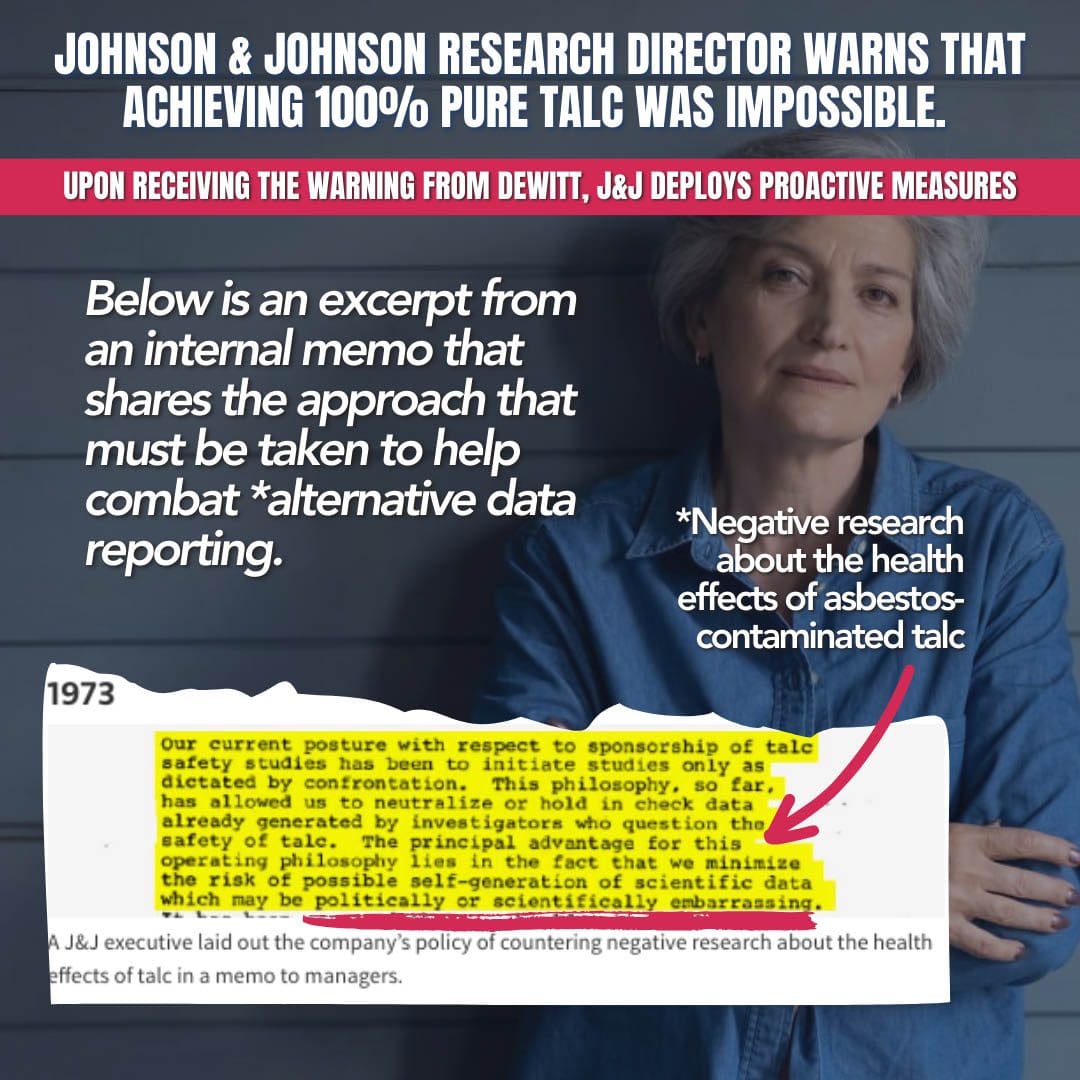
Why? Because this is yet another case – another situation – where a big corp backed by big money was doing whatever it took to continue driving sales… putting PROFIT over care of HUMAN LIFE.
A big thank you to all of the publishers who’ve been covering this issue… ESPECIALLY the folks over at Reuters who did such a wonderful job connecting the dots for their fellow humans to digest in a more chronological fashion.
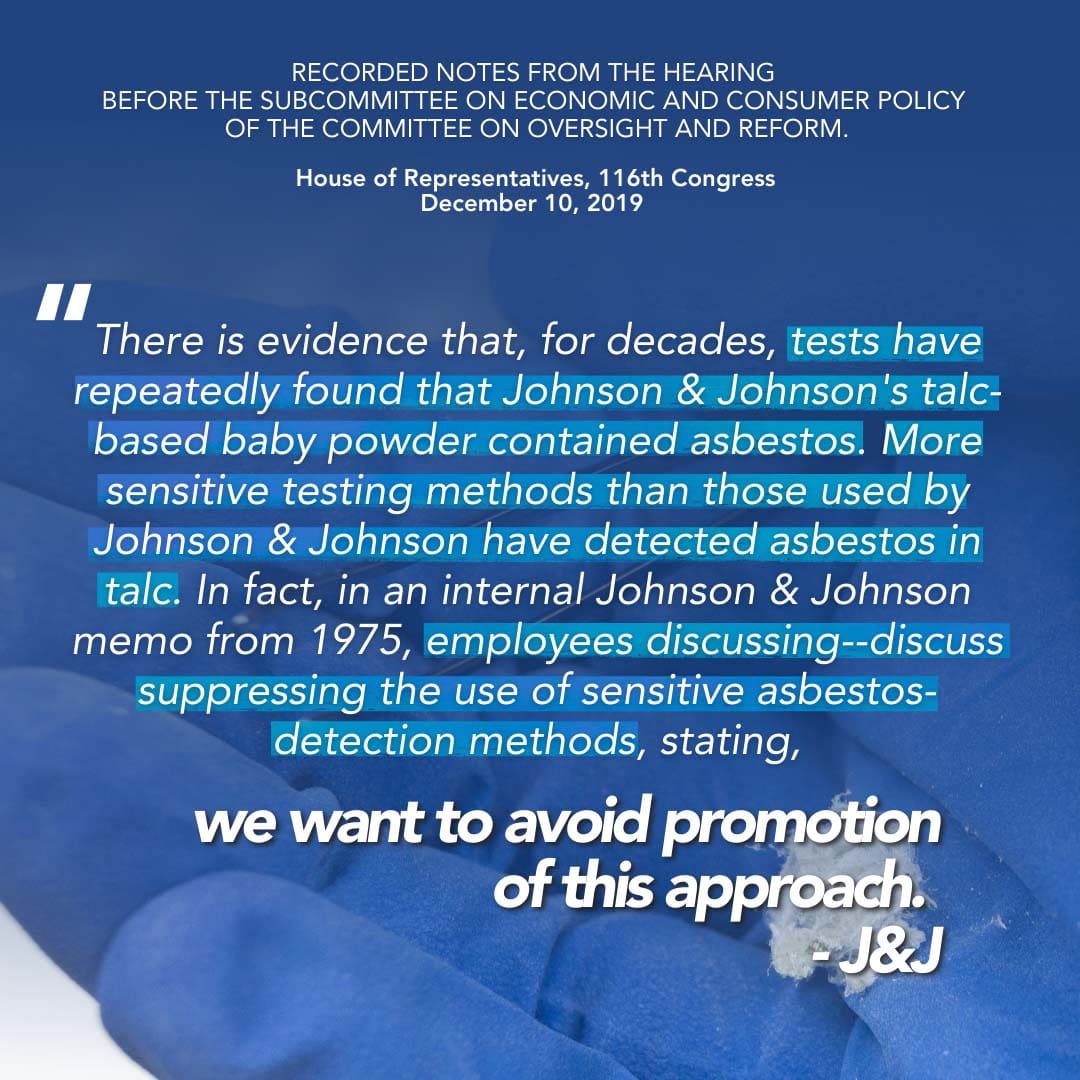
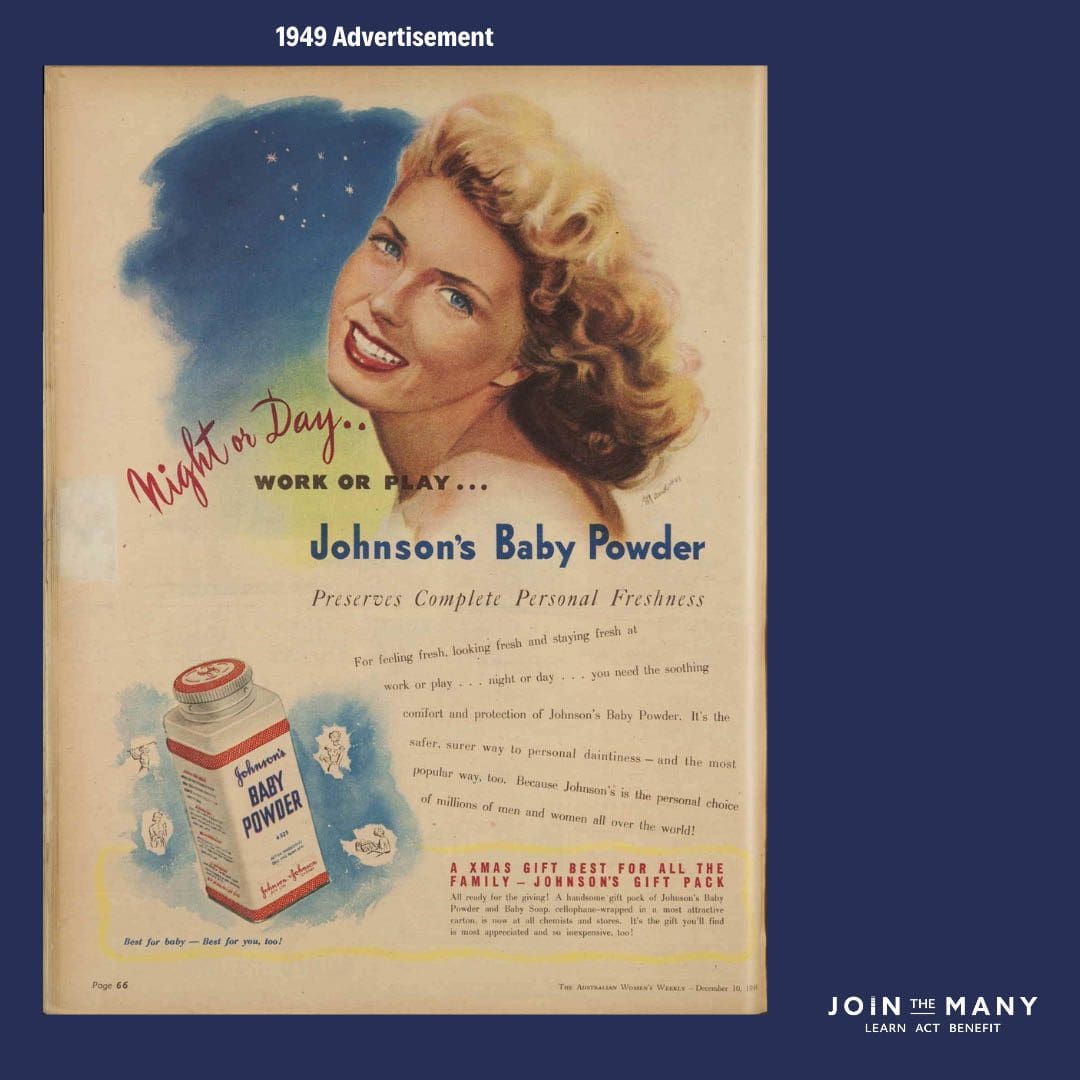
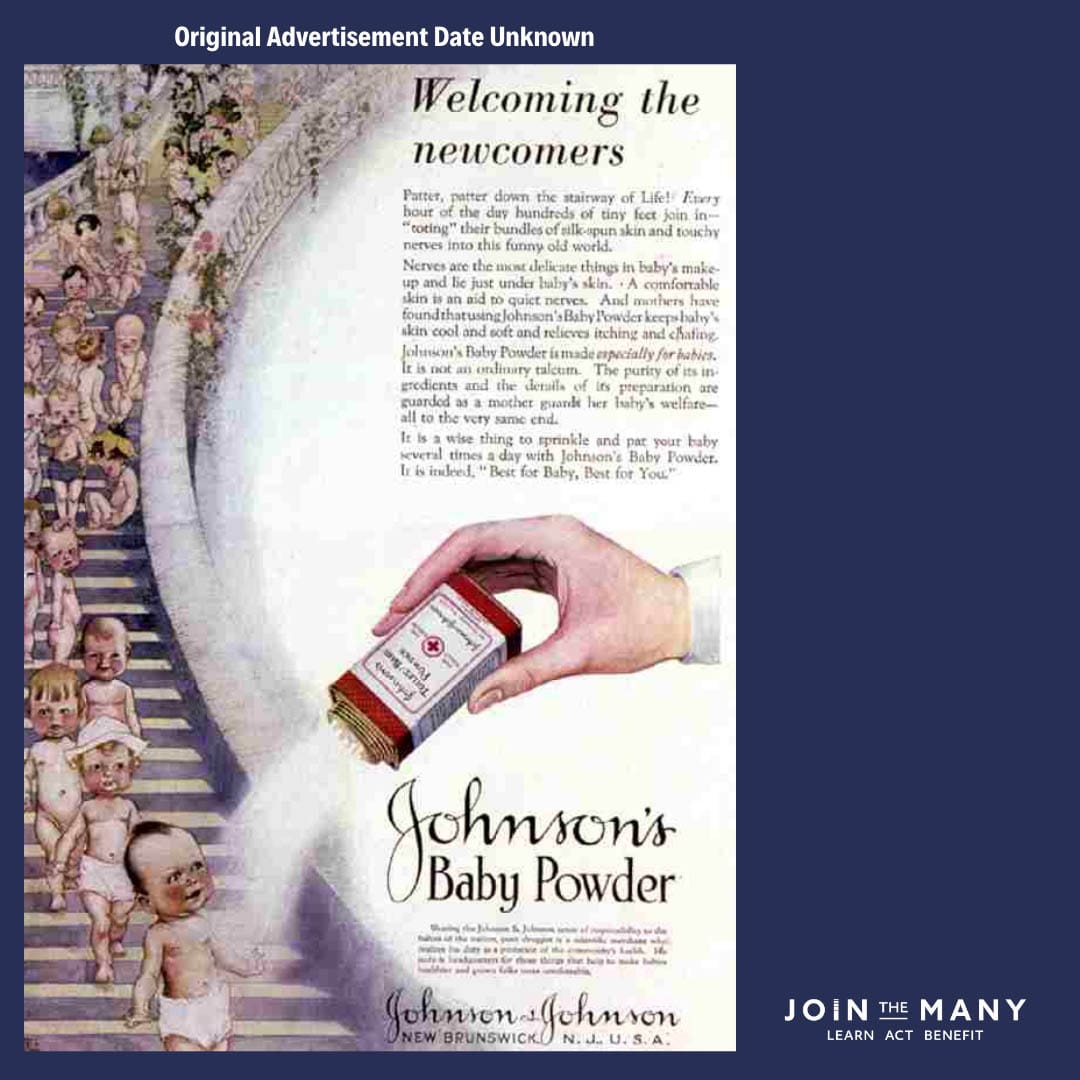
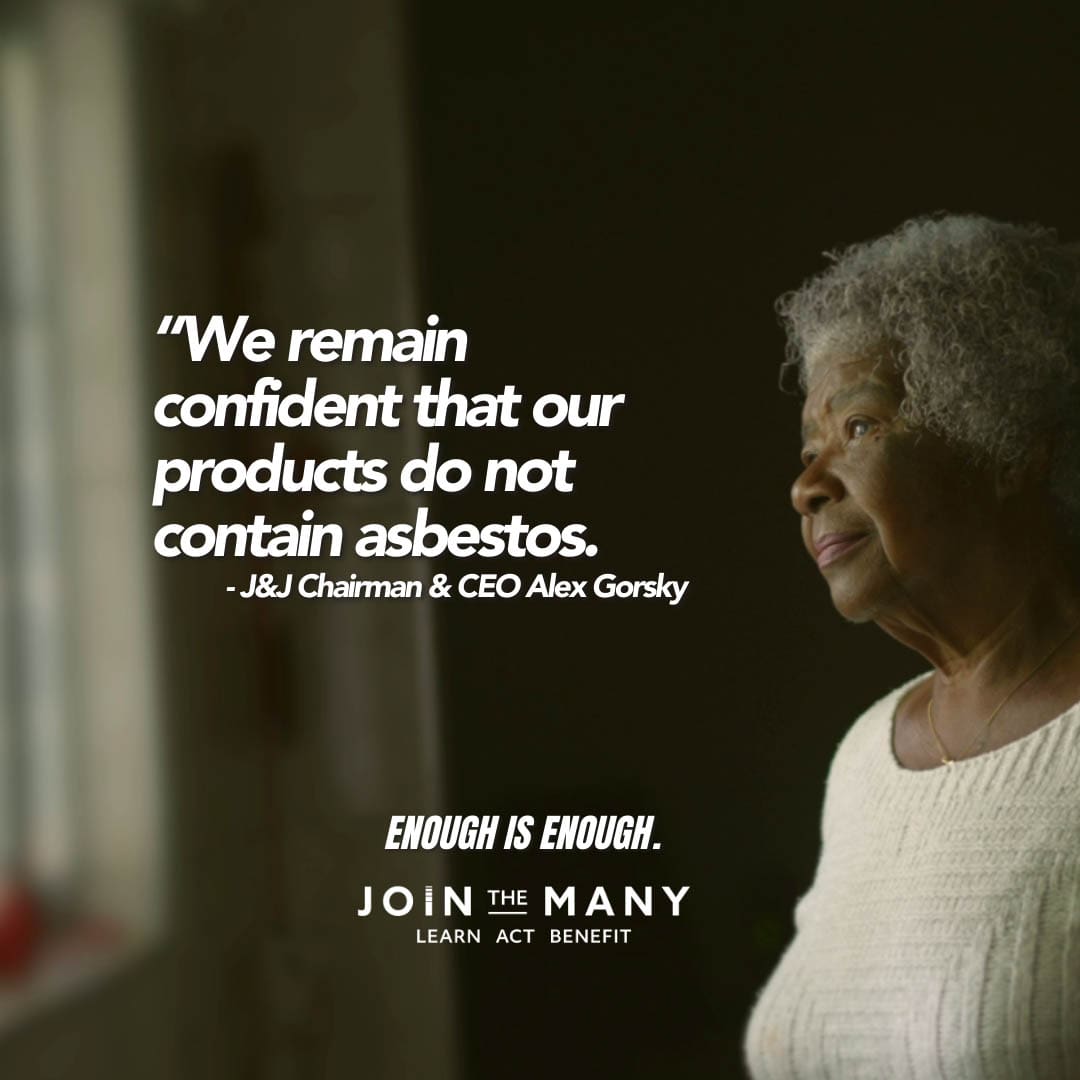
The Johnson & Johnson (J&J) corporation is facing allegations of negligence in concealing asbestos contamination in their popular baby powder product.
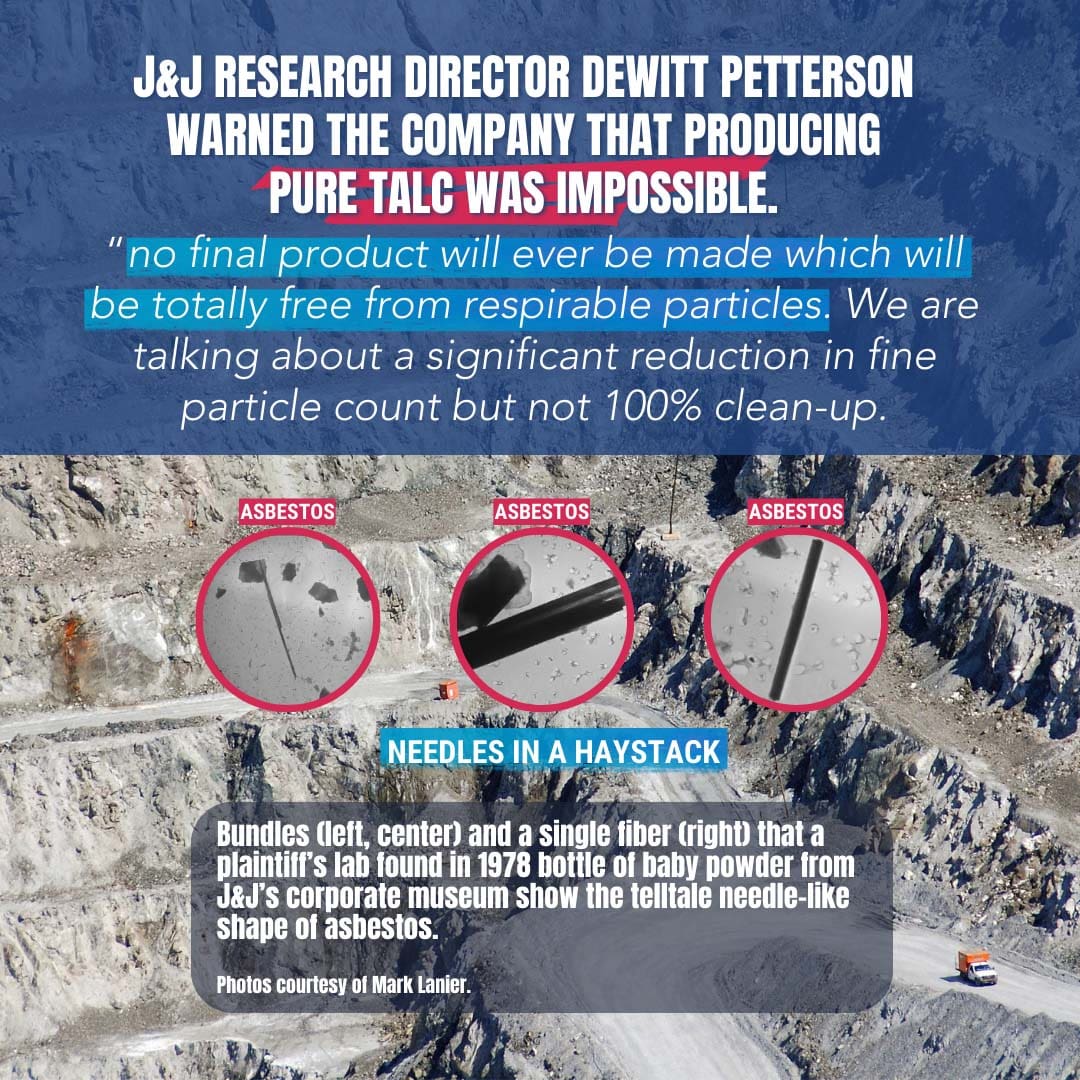
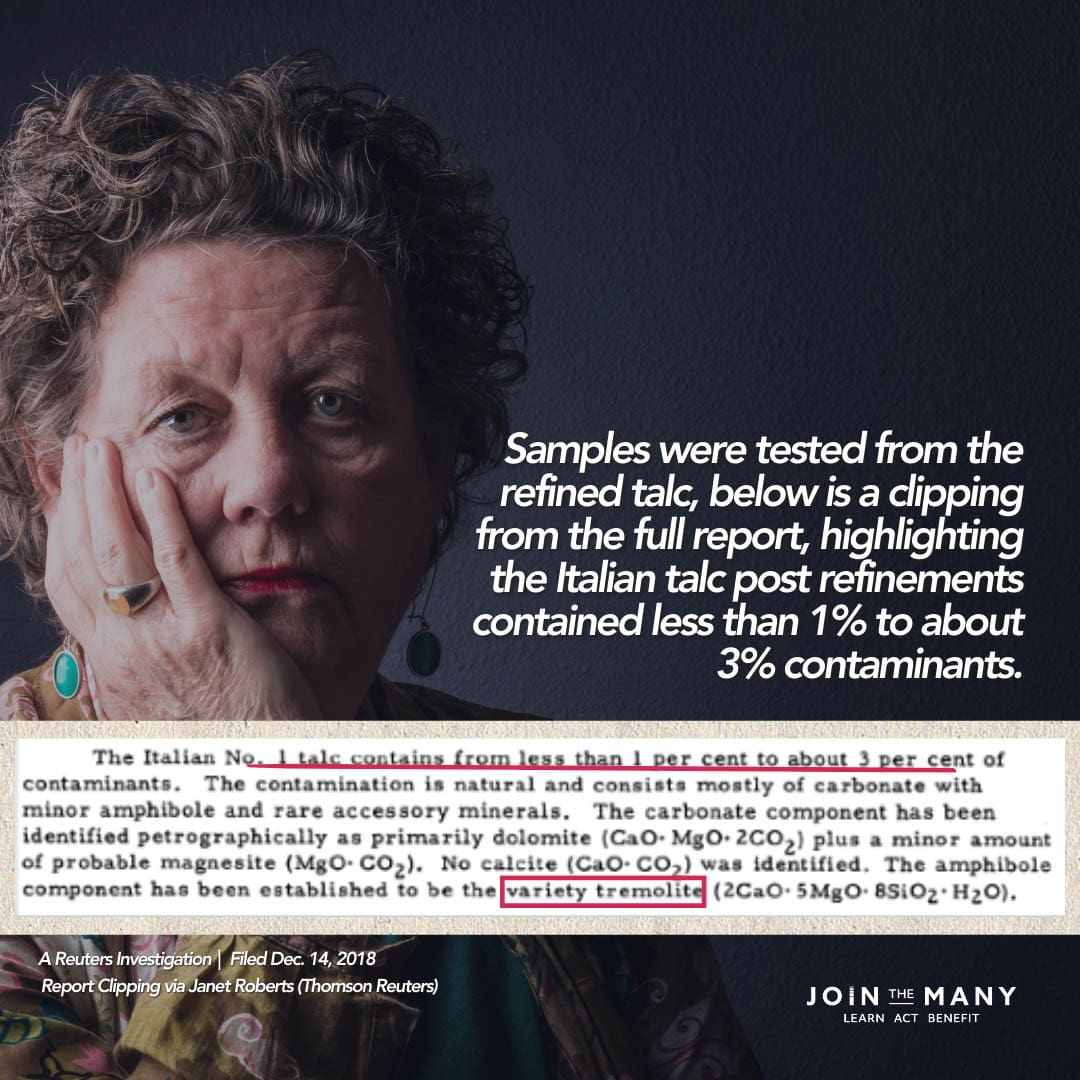
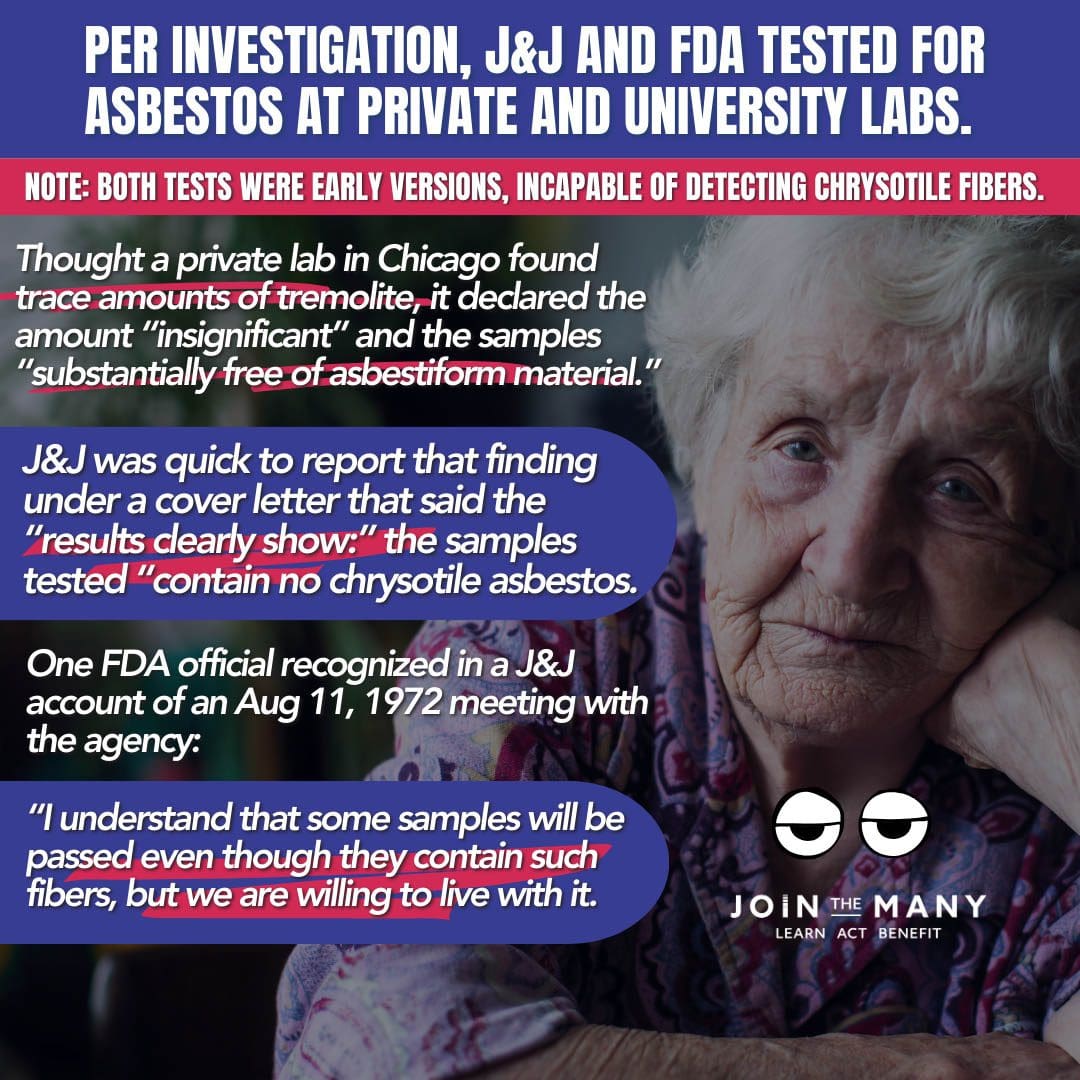
Lab tests conducted by plaintiffs’ experts found asbestos in Shower to Shower talc from the 1990s and in multiple samples of Baby Powder from past decades, including a 1978 bottle from J&J’s corporate museum.
A geologist from RJ Lee Group Inc, a consulting firm for J&J, dismissed these findings, claiming no asbestos in modern J&J talc products.
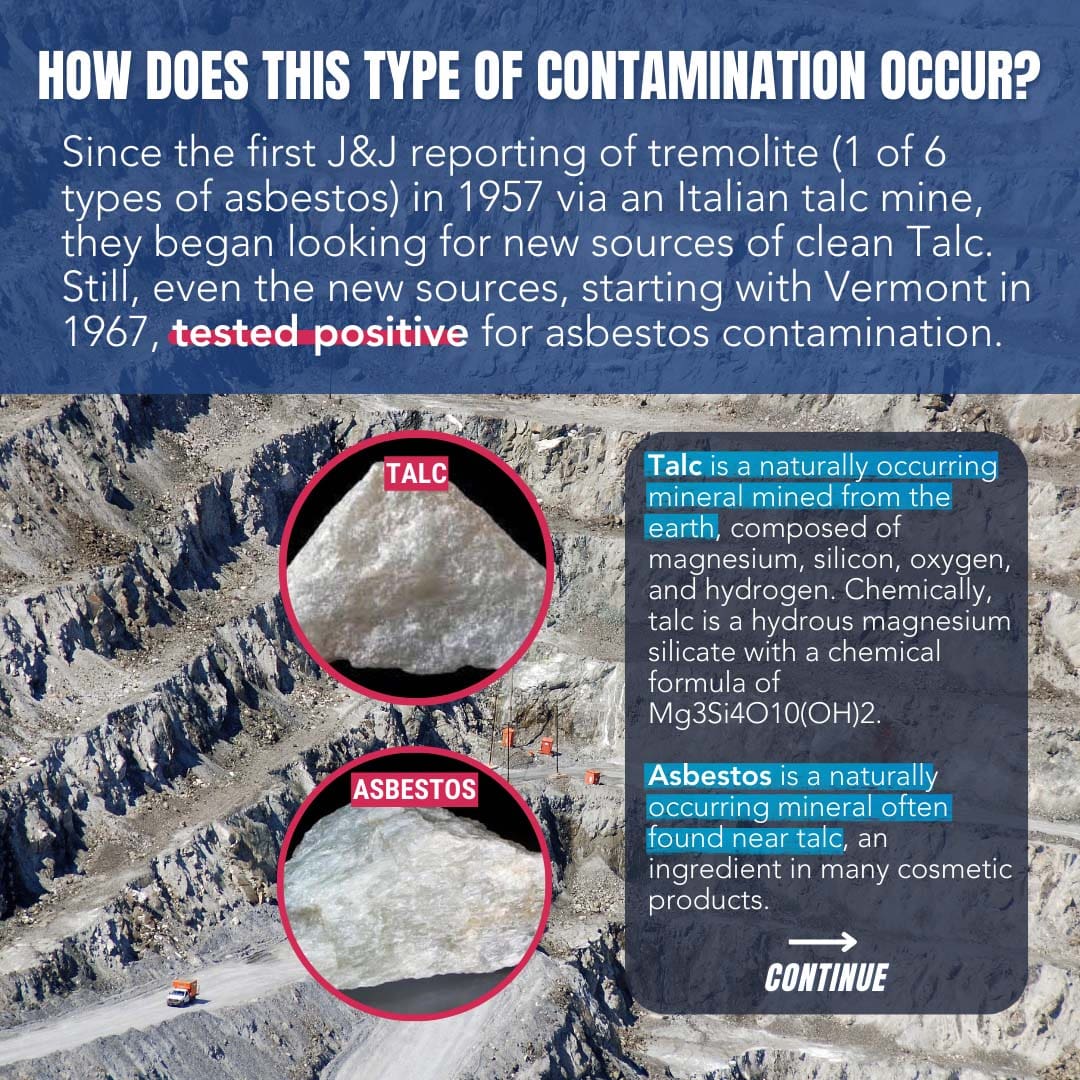
Talc in Baby Powder sold in the U.S. since 2003 comes from China through supplier Imerys Talc America, who asserts the Chinese talc is safe.
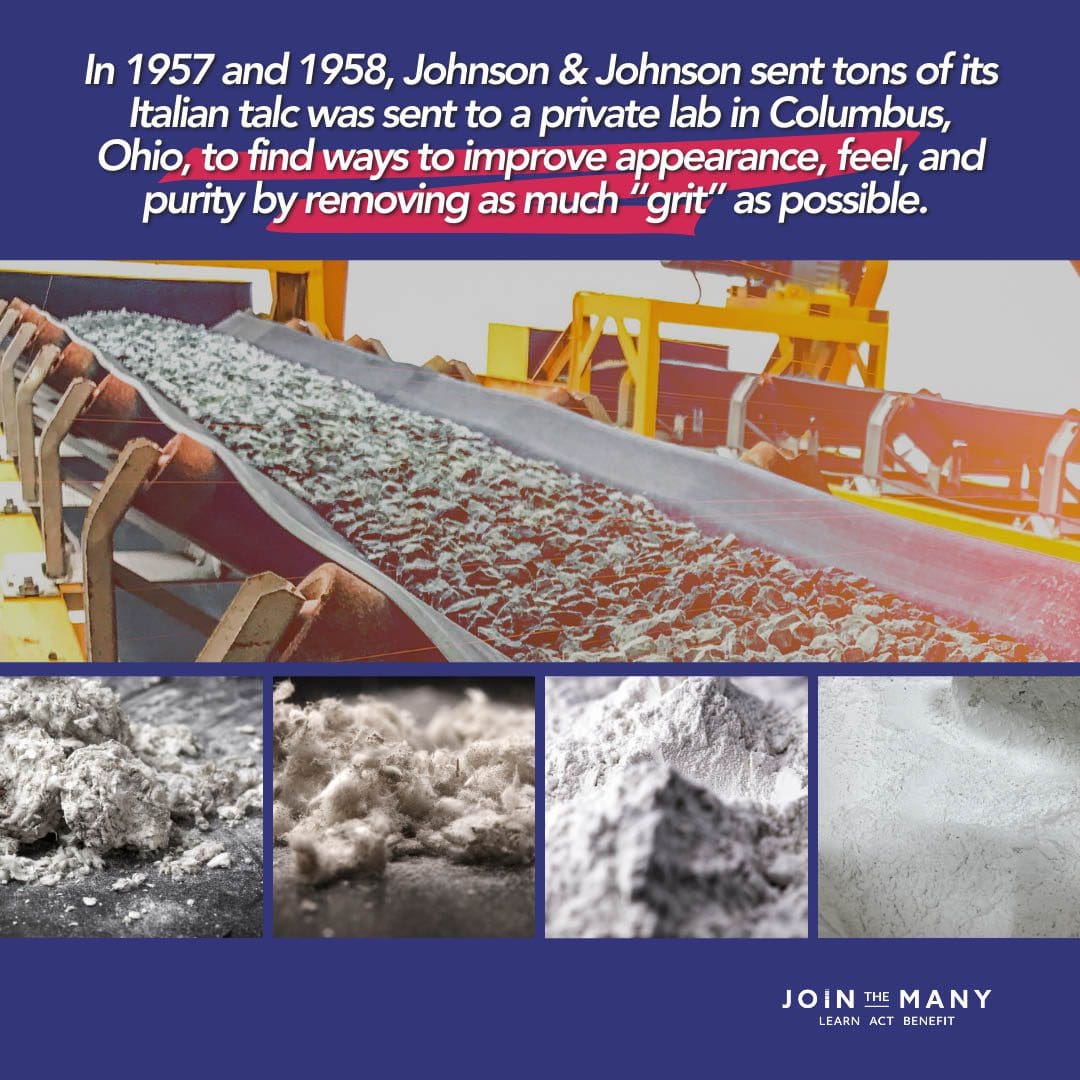
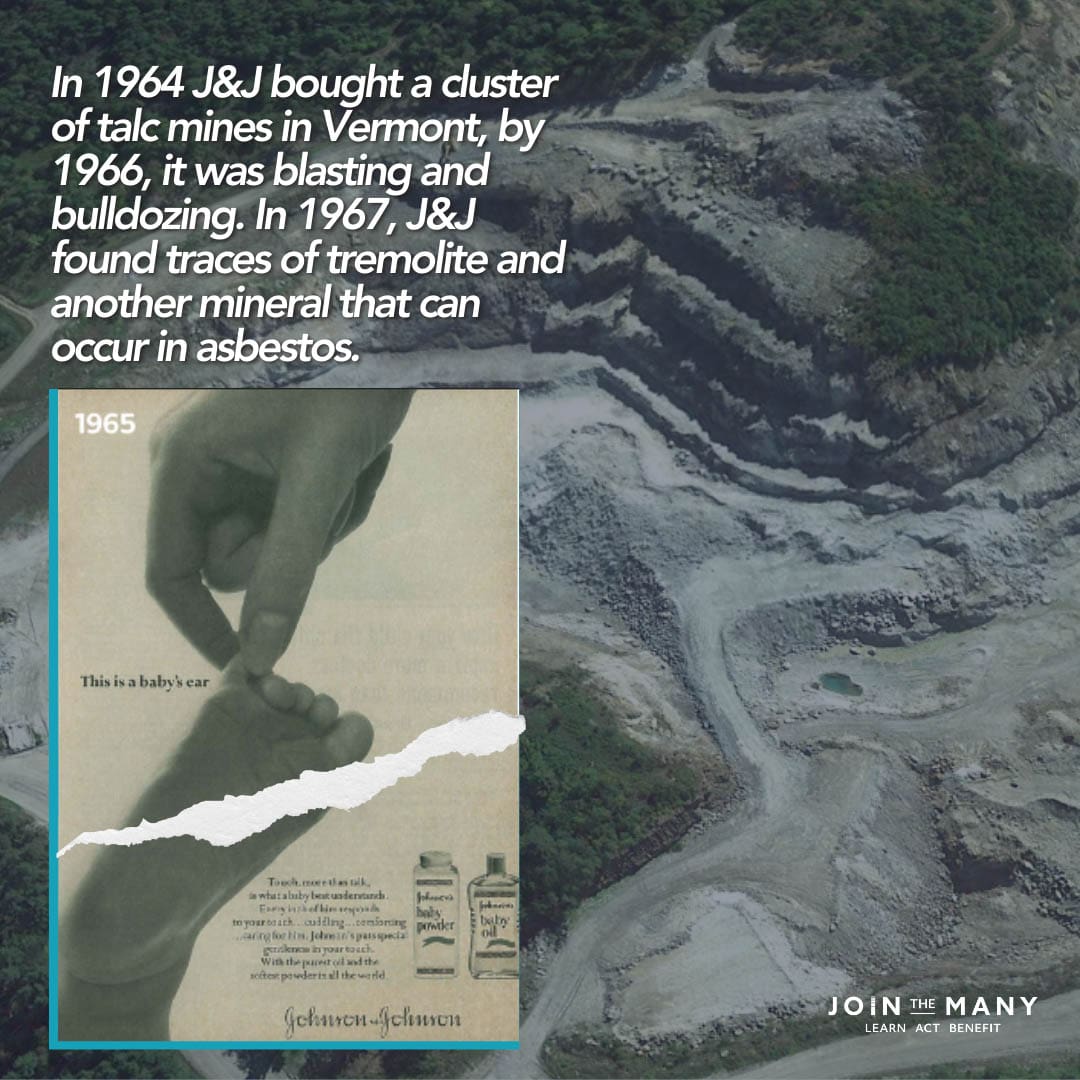
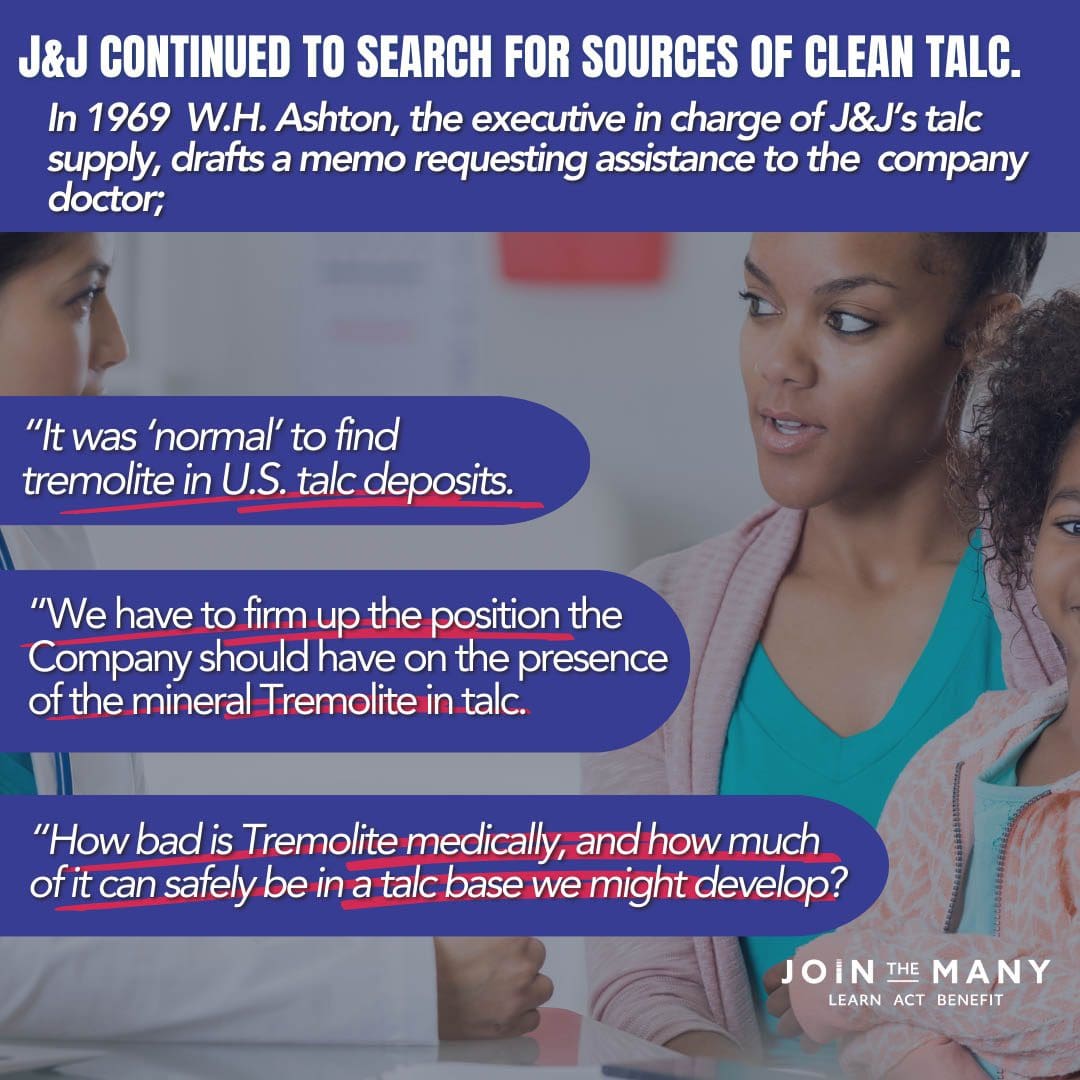
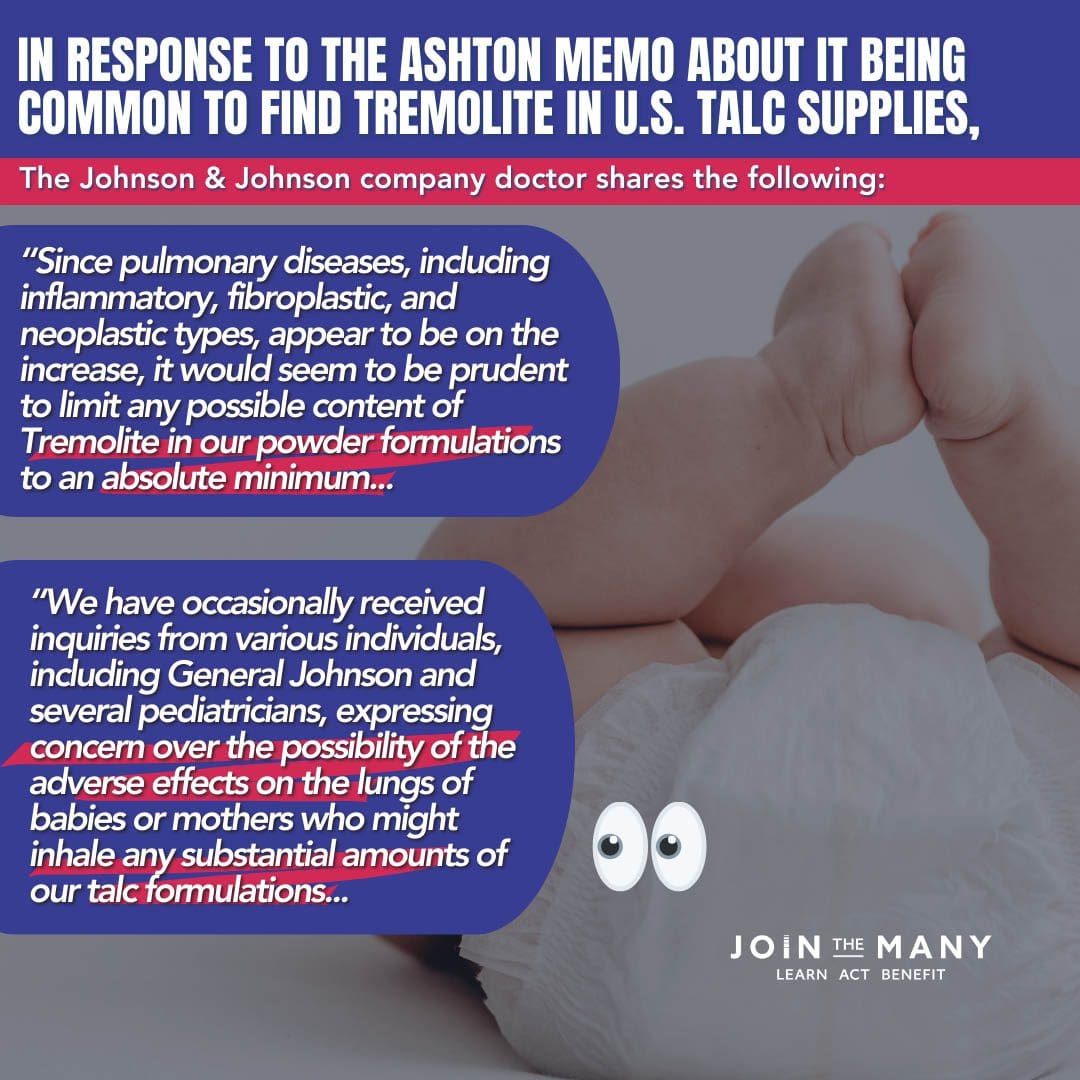
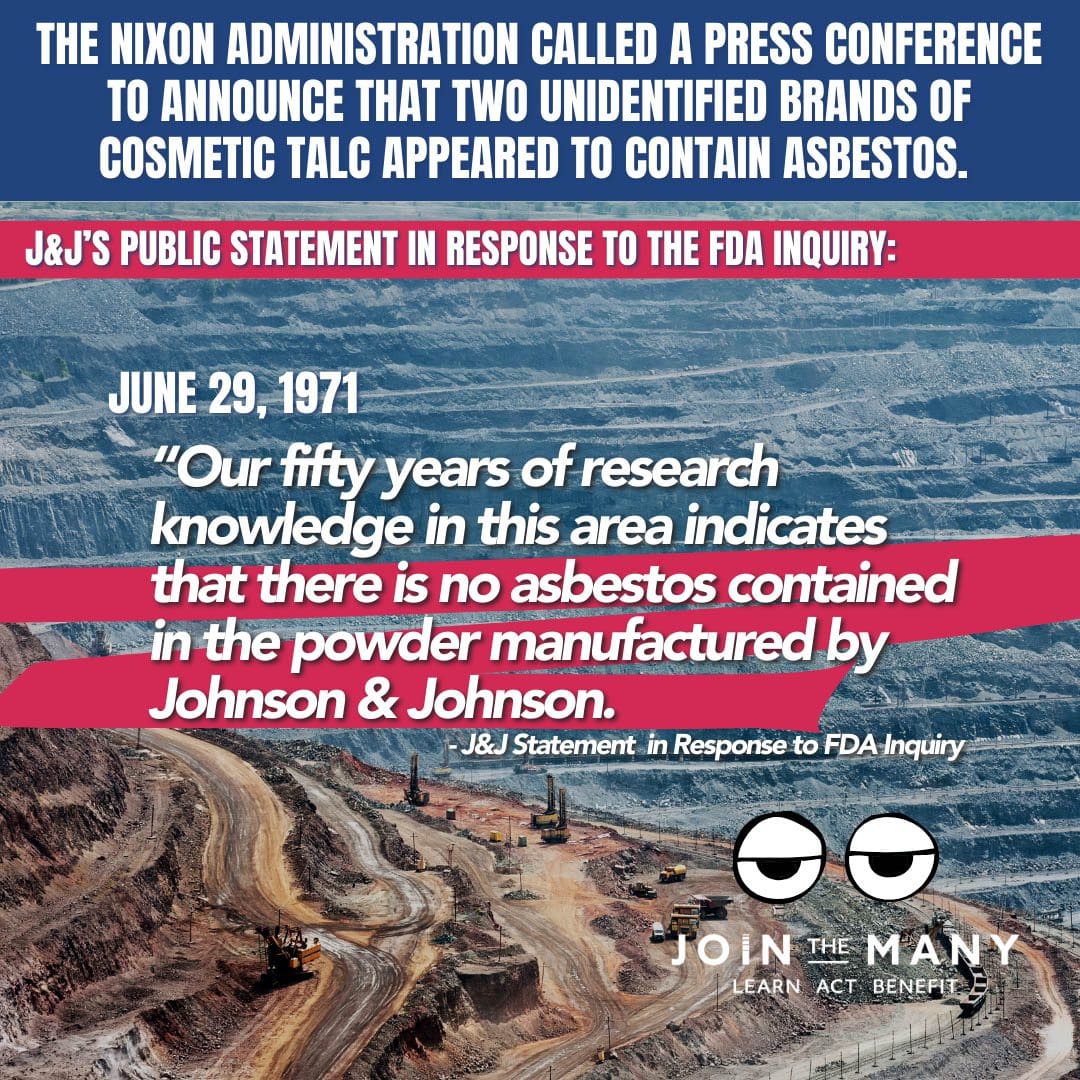
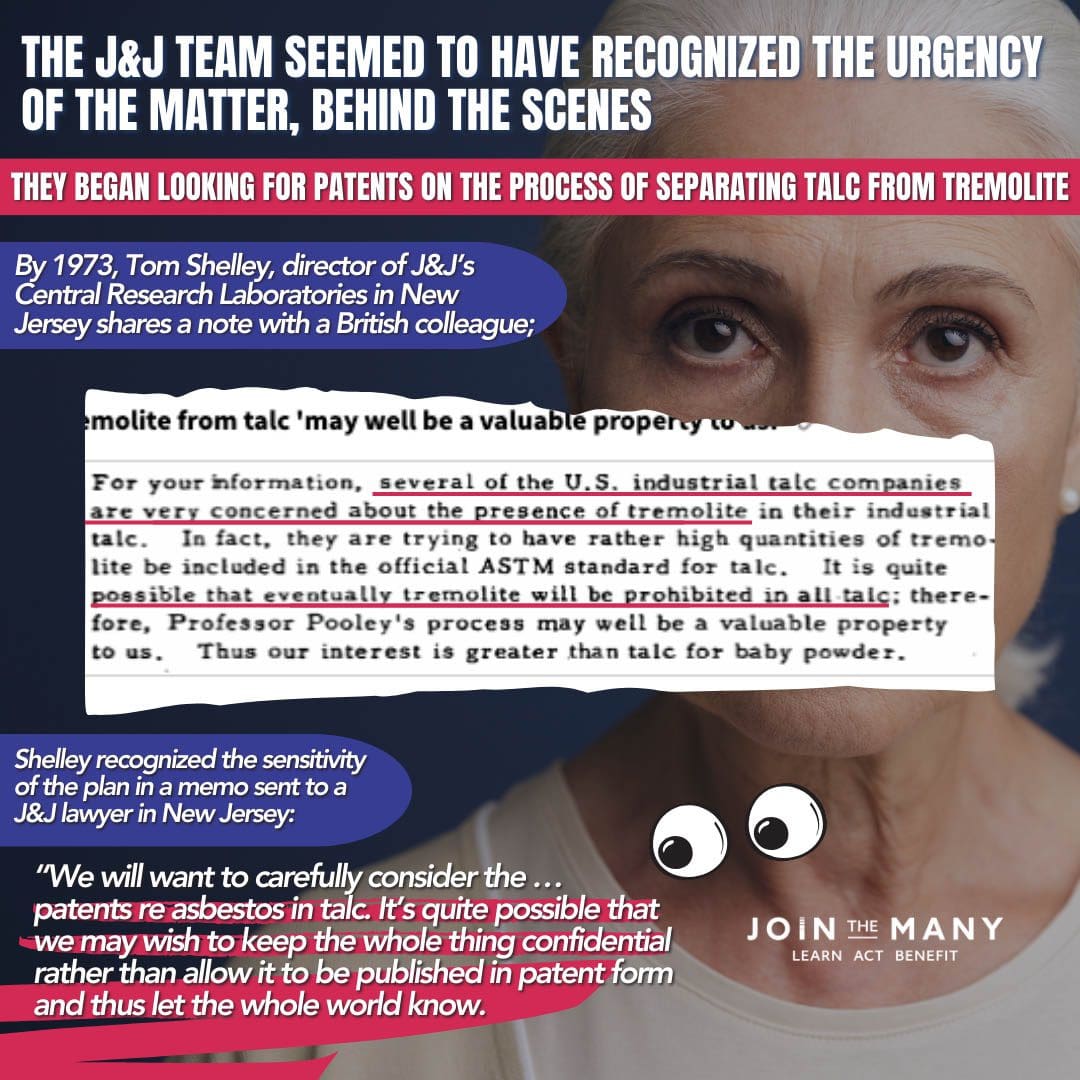
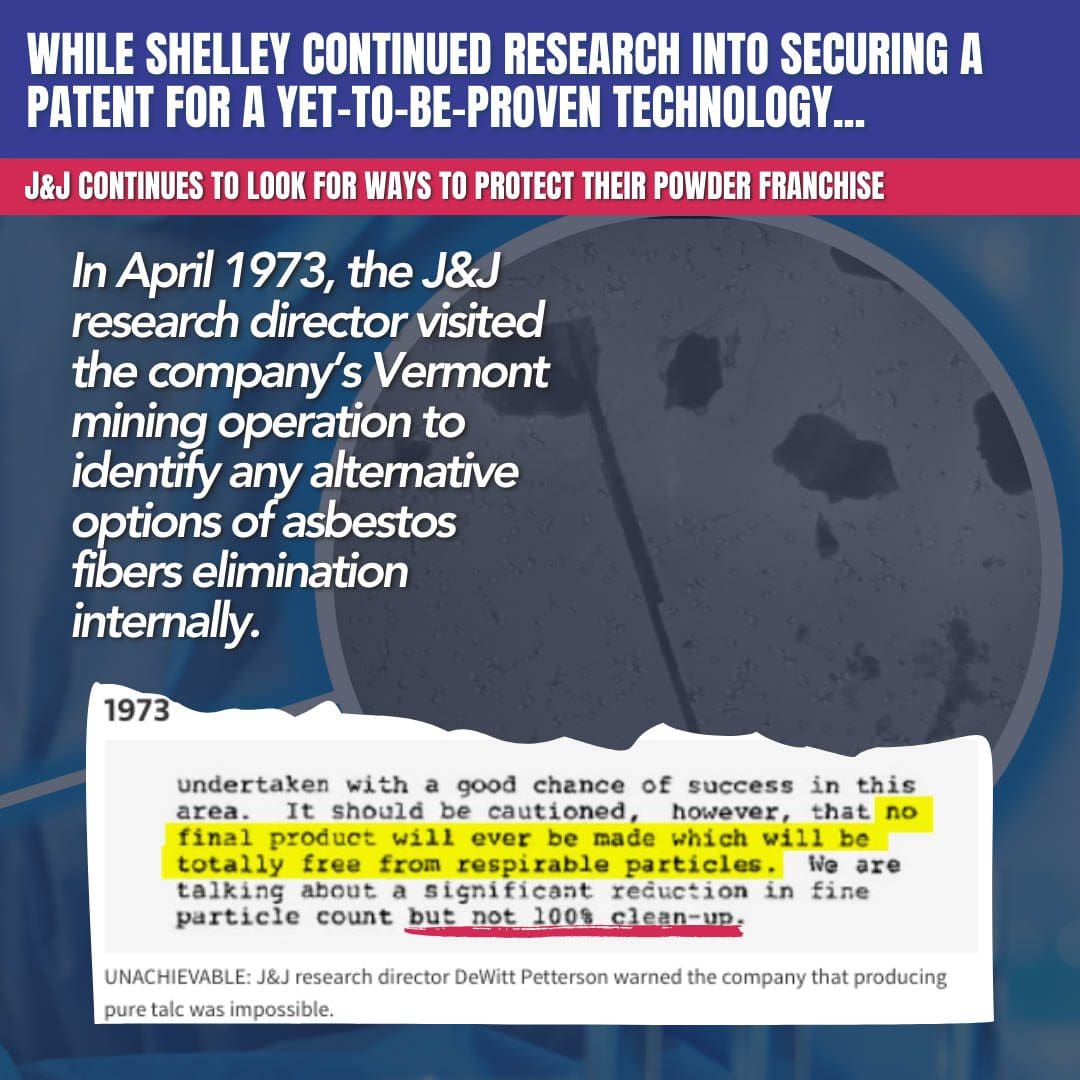
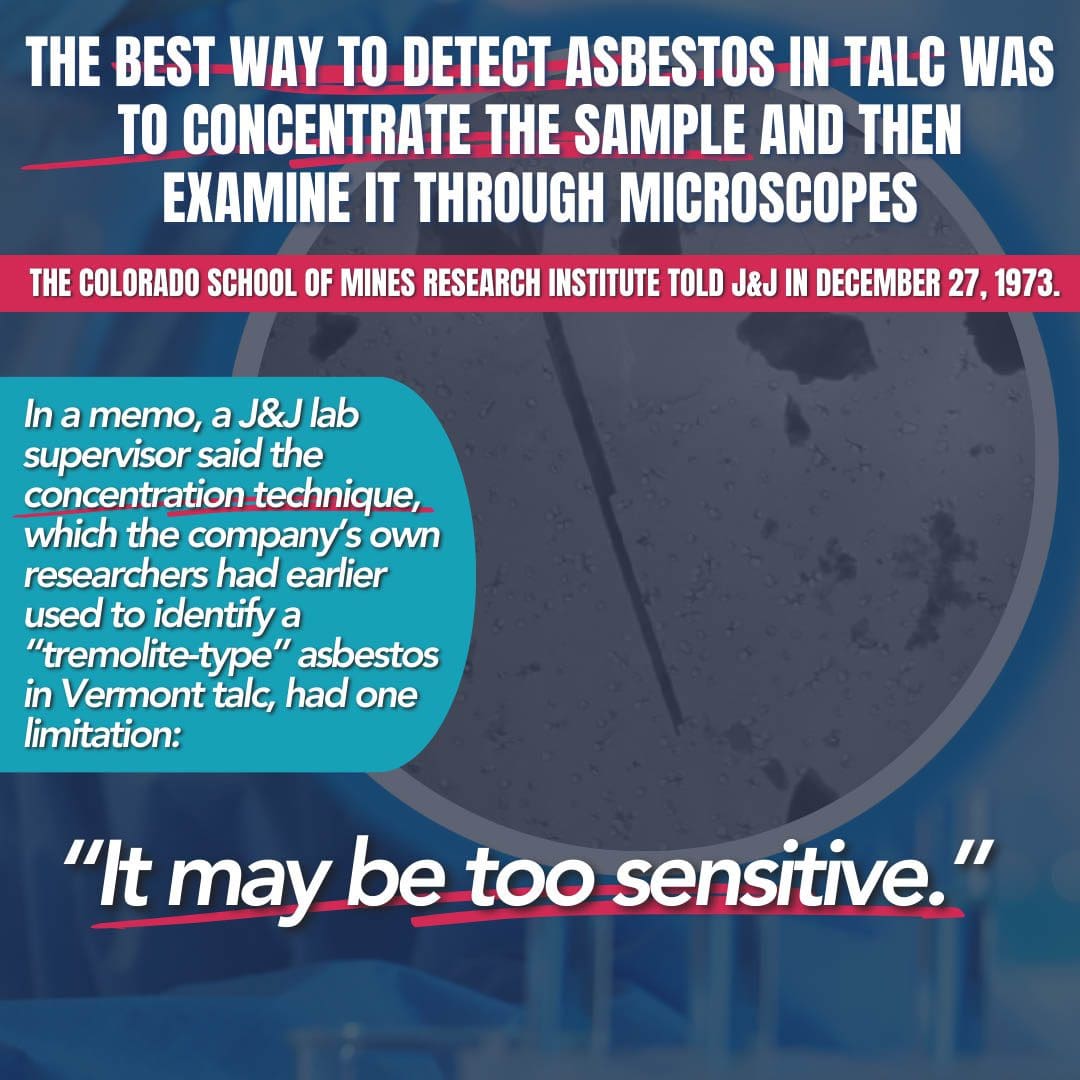
In the early 1970s, research and regulatory attention grew around asbestos as a carcinogen, prompting J&J to investigate alternatives and methods to reduce asbestos content in their talc.
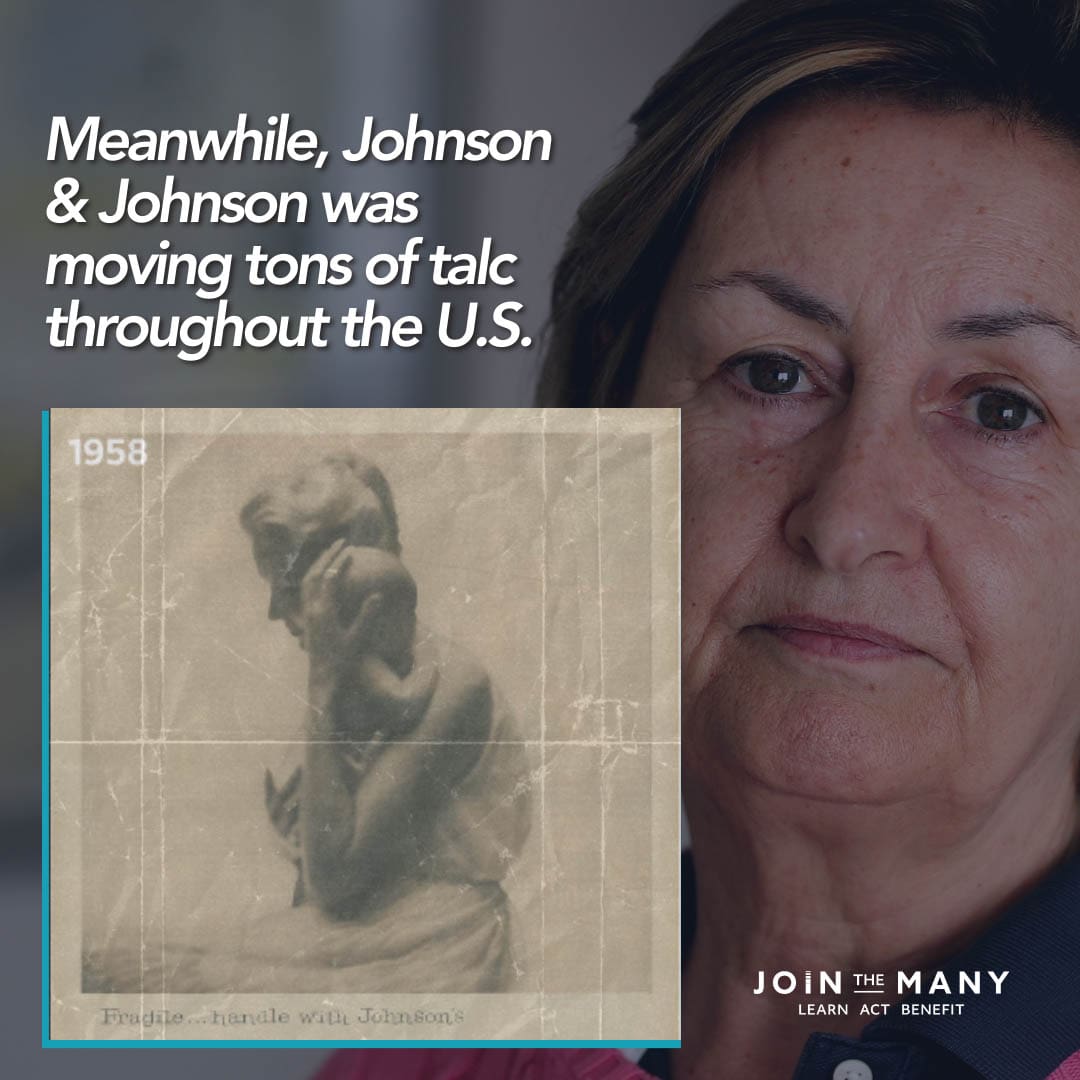
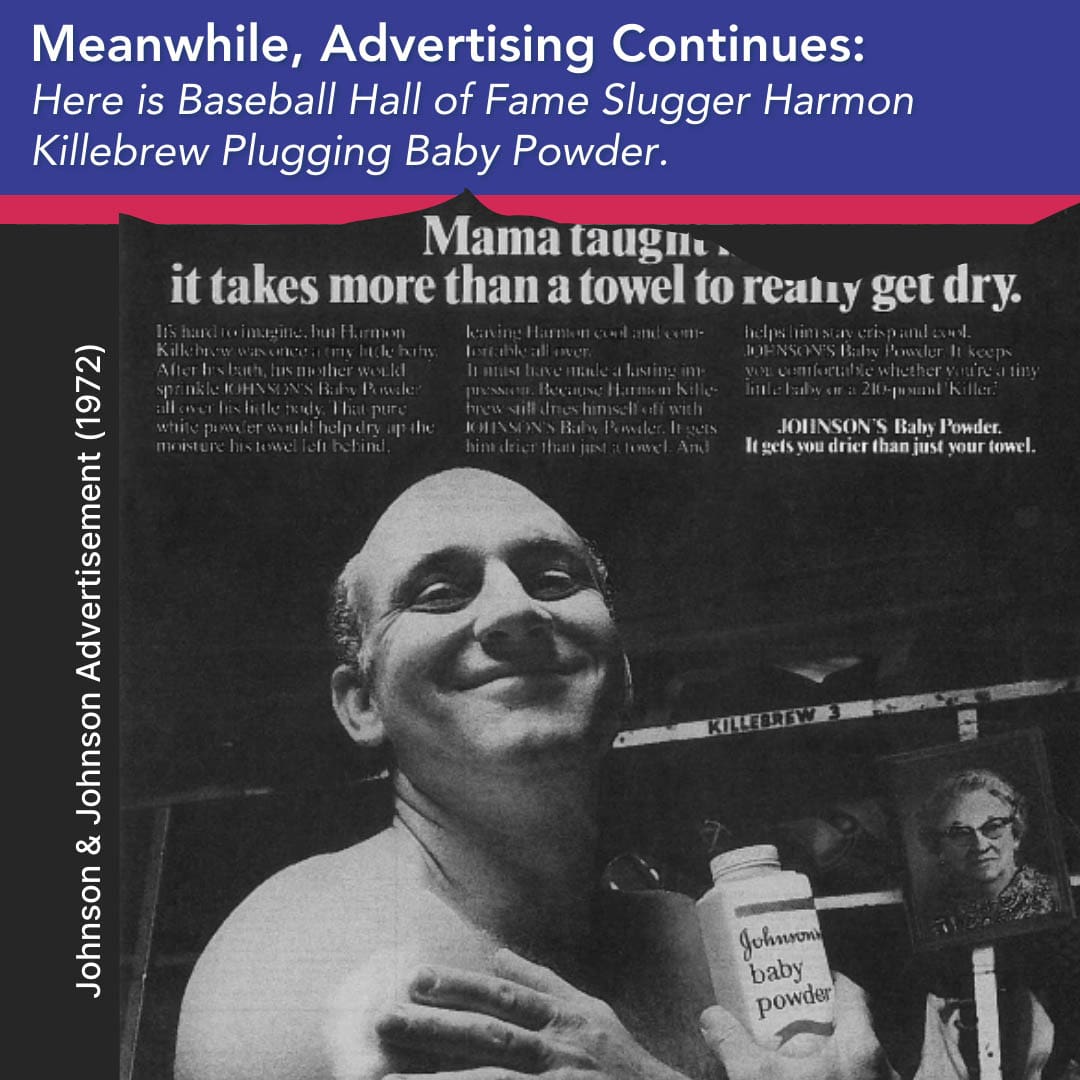
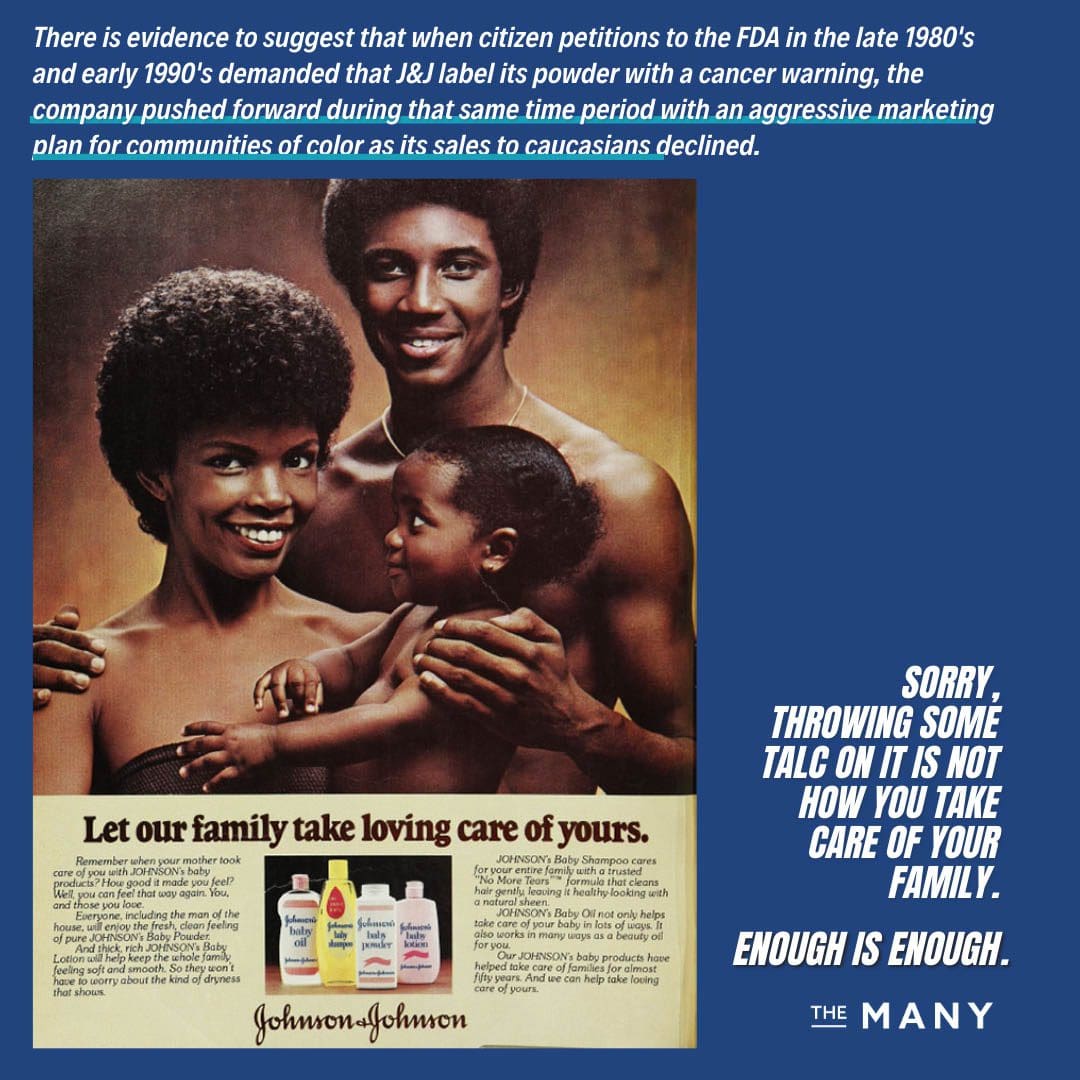
J&J’s talc products have been a cornerstone of the company’s image as a caring company, despite contributing only a small portion to its revenue.
Asbestos-related diseases have a long latency period, and J&J talc products sold over the past 60 years are at issue in the lawsuits.
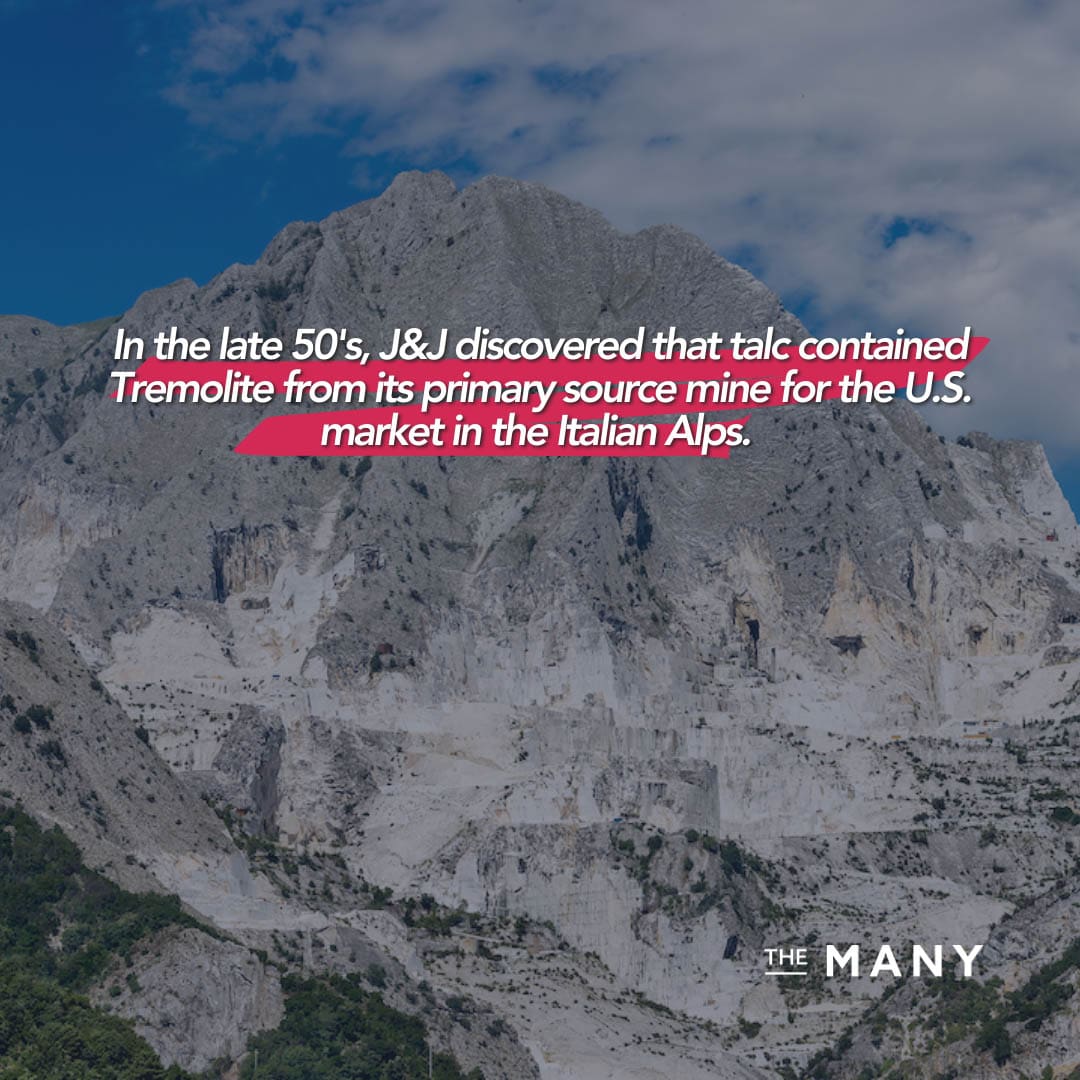
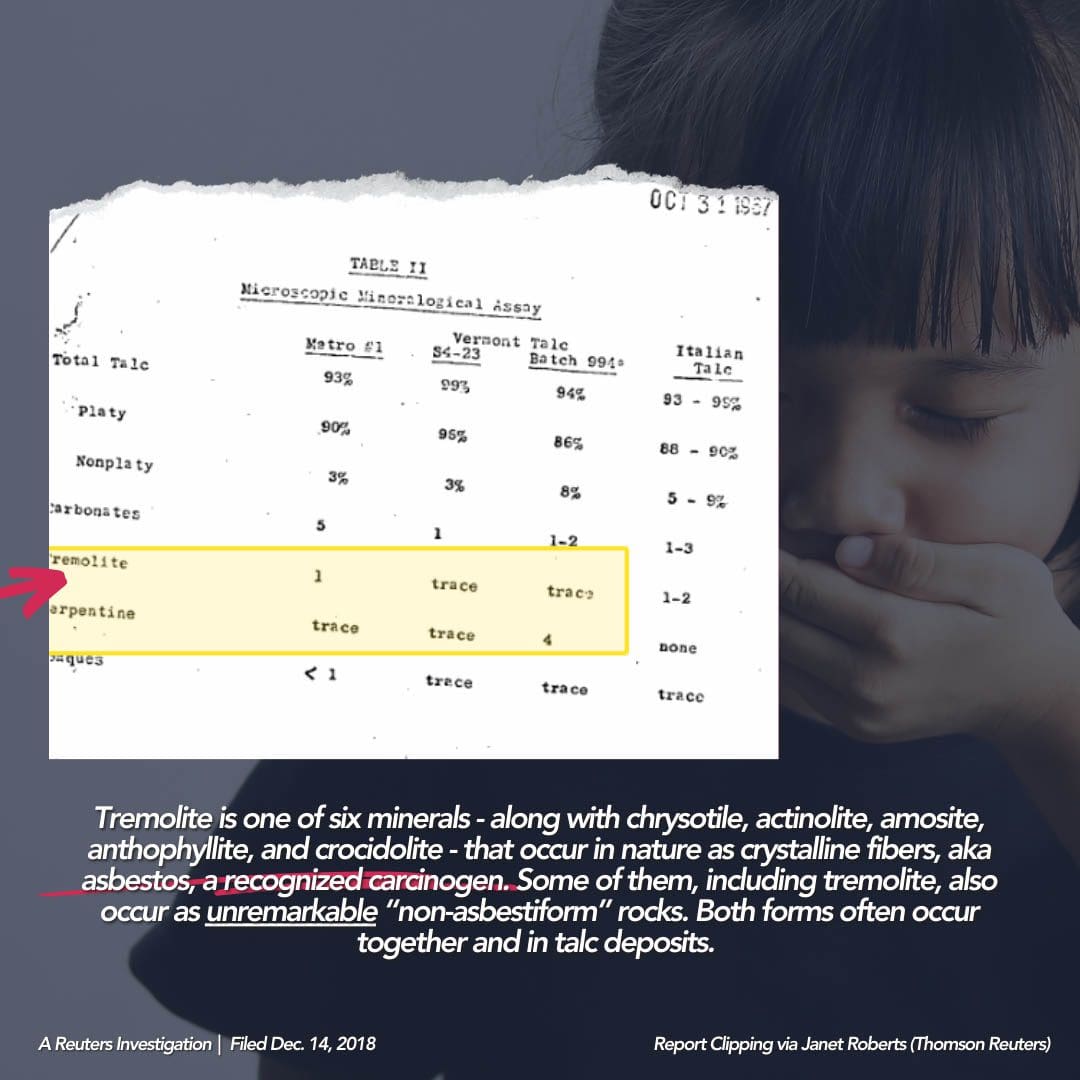
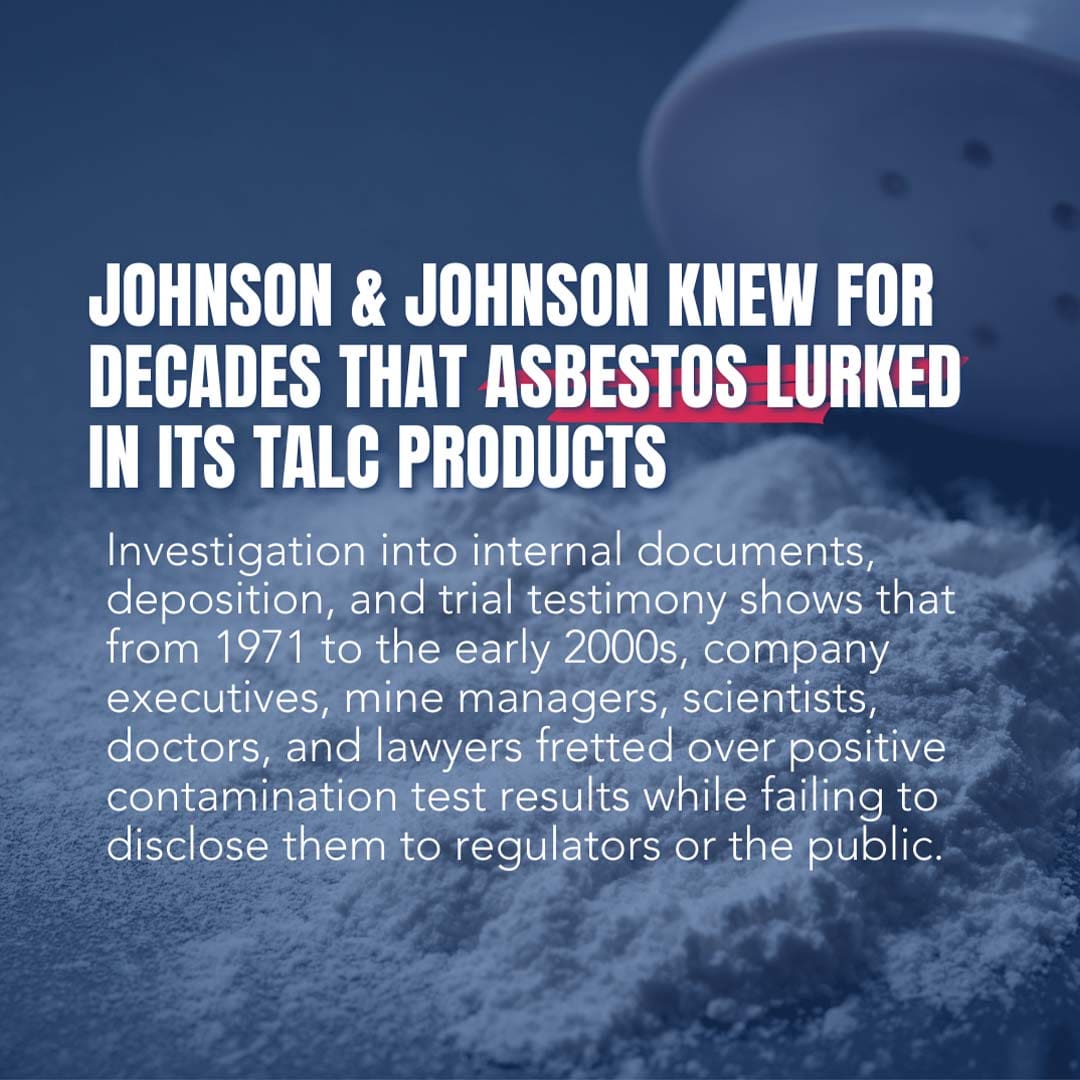
Historical documents suggest that J&J was aware of asbestos contamination concerns as far back as the 1950s.
J&J attempted to influence regulatory standards and testing methods, including proposing an X-ray scanning technique with a 1% tolerance for asbestos.
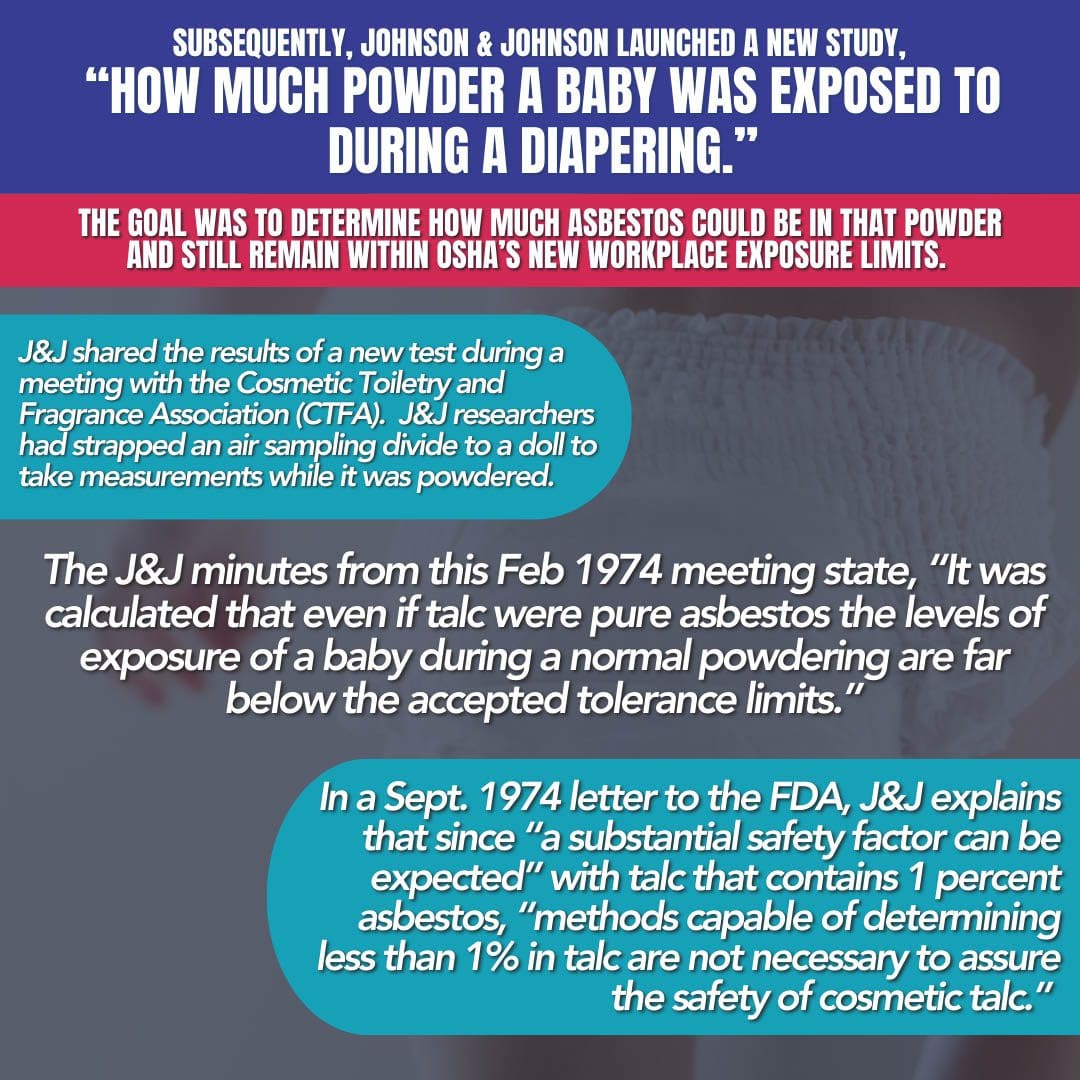
J&J conducted research to assess baby exposure to talc and asbestos, asserting that even with 1% asbestos, exposure levels would be below accepted tolerance limits.
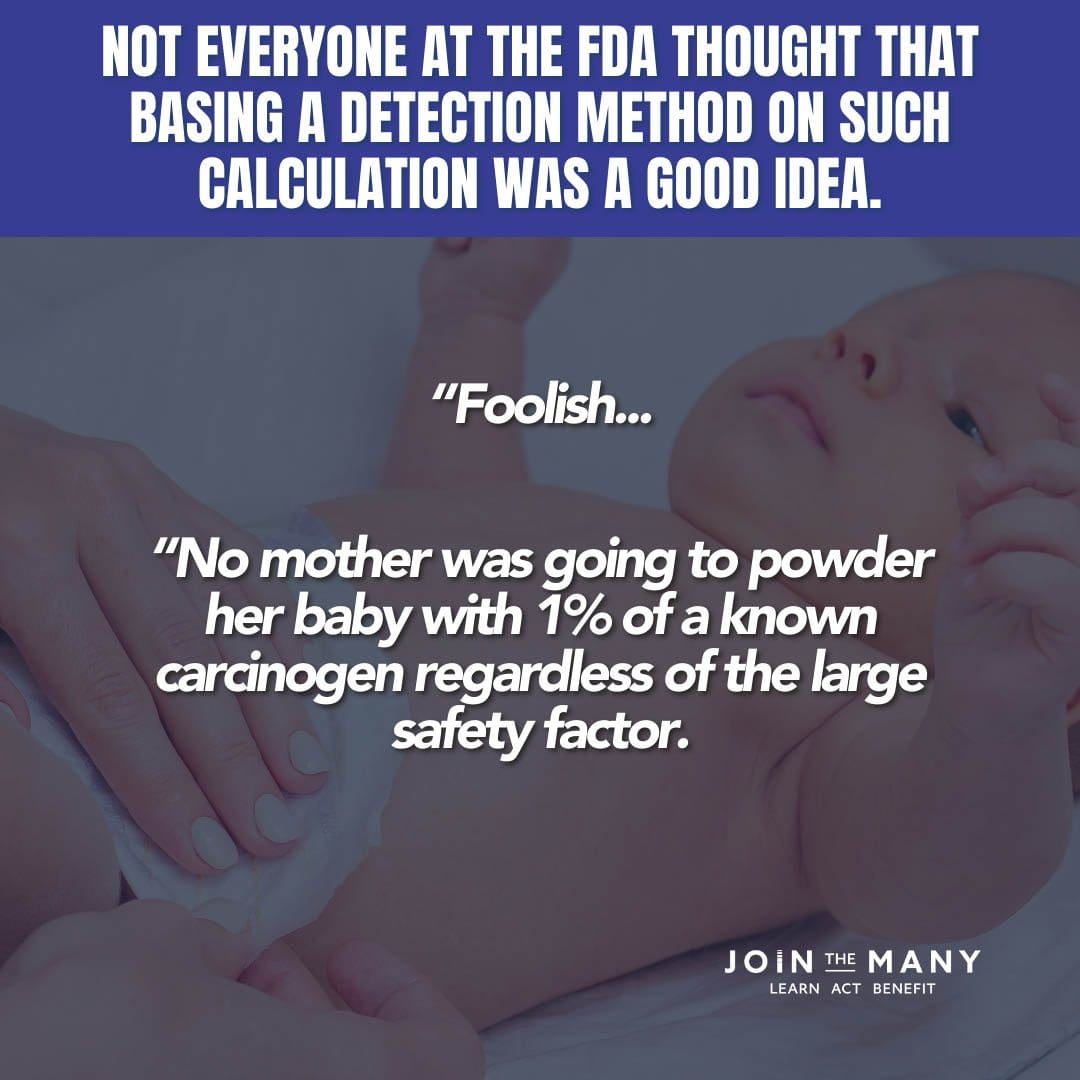
FDA officials expressed concerns about the safety of using talc with 1% asbestos, despite J&J’s calculations.

There is doubt on the safety of talcum powder, it is crucial to recognize early warning signs of talc-related cancers such as ovarian and lung cancer.

Talc is widely used in personal care products, knowing how to identify it on labels empowers you to make more informed choices.
Yes, it is still sold in the U.S., but many companies have shifted to cornstarch-based alternatives due to health concerns.