
Newsletter
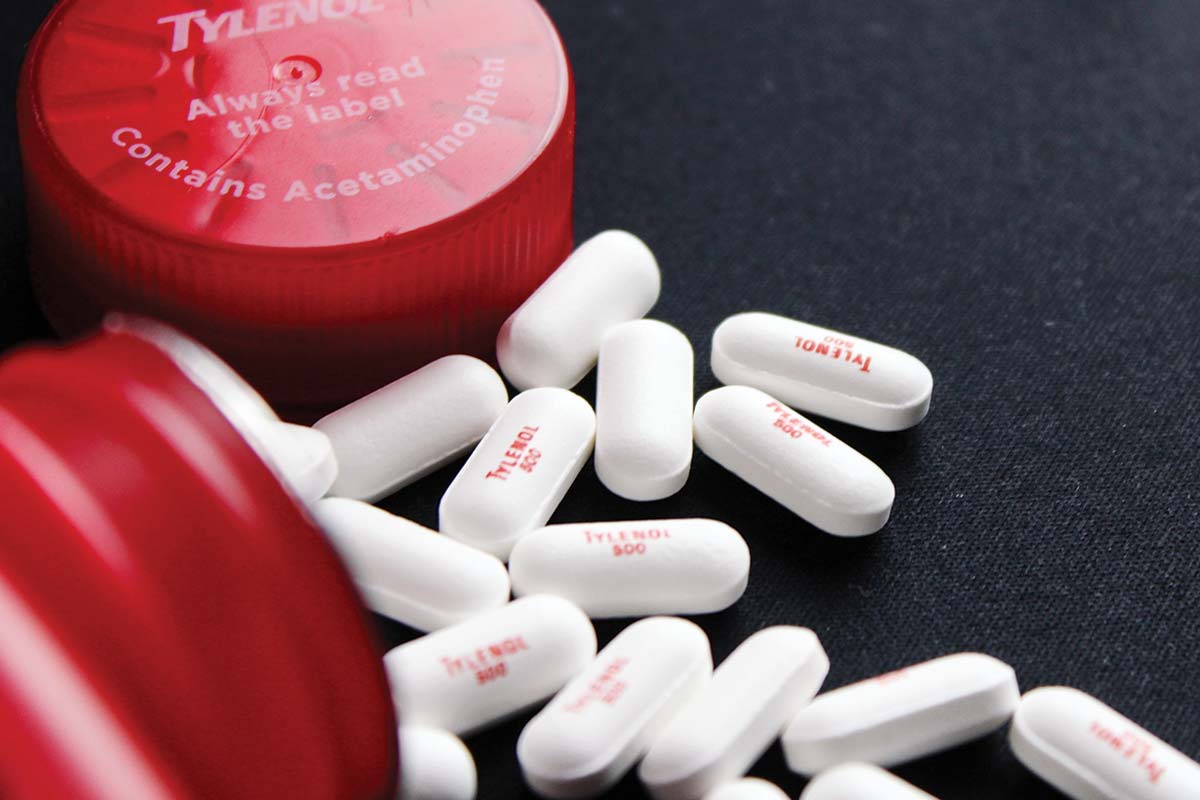
What is Tylenol? Tylenol is America’s most trusted pain and fever medicine. The active ingredient is called acetaminophen (pronounced: ah-SEE-tah-MIN-oh-fen). Millions of people use it safely every day.
Why Do People Choose Tylenol? Tylenol works differently than other pain medicines like aspirin or ibuprofen. It’s gentler on your stomach and safer for most people to use.
 Tylenol's story starts in a chemistry lab in 1877. That's when scientist Harmon Northrop Morse first created acetaminophen at Johns Hopkins University. But it took nearly 80 years before this discovery became the medicine millions trust today.
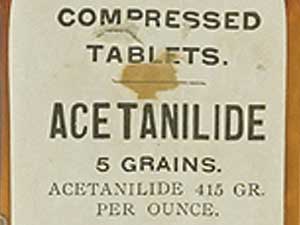 In 1886, two French doctors made a happy accident. They were treating a patient with stomach worms and asked a pharmacy for their usual medicine. The new pharmacist made a mistake and gave them acetanilide instead.
To their surprise, the patient's fever went down. This mistake led to the first fever-reducing medicines. But these early drugs had dangerous side effects.
 Scientists didn't understand why these medicines worked. In 1899, a German researcher discovered the secret: the body was turning these dangerous drugs into something safer - acetaminophen.
But this discovery was mostly ignored for 50 years.
 In 1947, two American scientists, David Lester and Leon Greenberg, proved what others had missed. They showed that acetaminophen was the safe, active ingredient all along. Their research proved it worked just as well as aspirin but without the stomach problems.
 McNeil Laboratories was a small, family-owned company in Philadelphia. In the early 1950s, two brothers took over from their father. They learned about this "new" safe pain reliever that wasn't on the market yet.
 In 1955, McNeil introduced the first Tylenol product: "Tylenol Elixir for Children". They packaged it like a red fire truck and used the slogan "for little hotheads." The name Tylenol came from the drug's chemical name: "N-aceTYL-para-aminophENOL". It was catchy, easy to remember, and uniquely American.
Smart marketing made the difference. Instead of competing with aspirin for adults, they focused on children's fever medicine where parents wanted something gentler.
 Tylenol was so successful that Johnson & Johnson bought McNeil in 1959. One year later, in 1960, Tylenol became available without a prescription for the first time.
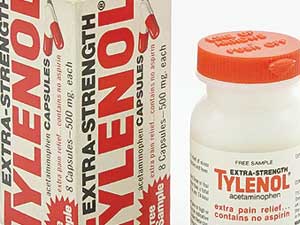 By 1975, Johnson & Johnson launched "Extra Strength" Tylenol with a higher dose than aspirin. This bold move worked. By 1976, Tylenol became America's #1 pain reliever.
 Tylenol earned trust in hospitals first, then with families. By 1980, advertising could claim "hospitals use Tylenol more than any other over-the-counter pain reliever."
 In September 1982, seven people died in Chicago from Tylenol capsules poisoned with cyanide. Someone had tampered with bottles in stores. Johnson & Johnson faced their biggest crisis.
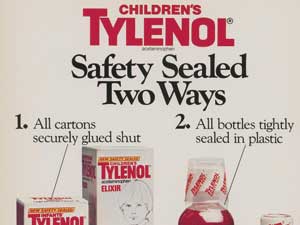 Instead of making excuses, Johnson & Johnson immediately recalled every Tylenol capsule in America - over 31 million bottles. They created new tamper-proof packaging that became the standard for all medicines.
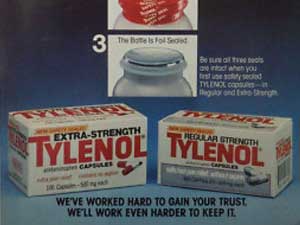 The company spent over $50 million to rebuild trust. They gave away millions of free samples and educated people about safety. By 1983, Tylenol was back to being #1.
 Tylenol expanded beyond liquid and pills. Extended-release formulas, specialty products for different age groups, and combination medicines followed.
 What started in Philadelphia spread worldwide. Tylenol launched in Canada, Europe, Asia, and beyond. Each new country confirmed what Americans learned: acetaminophen was uniquely safe and effective.
 In 2023, Johnson & Johnson spun off its consumer products, including Tylenol, into a new company called Kenvue. After nearly 70 years, Tylenol remains America's most trusted pain reliever.
Understanding Tylenol’s long history shows why doctors and families trust it. Sixty-eight years of safe use, constant safety improvements, and transparent crisis management built this trust over generations.
From a chemistry experiment to a medicine cabinet essential, Tylenol’s story proves that good science, combined with honest business practices, creates products that truly help people.
Even after 150 years of study, scientists are still learning exactly how Tylenol works. But we do know it’s different from other pain medicines – and that difference makes it safer for many people.
Tylenol doesn’t work where you hurt. Instead, it works in your brain and spinal cord. Think of pain like an alarm system in your body. When you hurt yourself, nerves send “alarm signals” to your brain saying “something’s wrong!”
Tylenol turns down the volume on these alarms. It raises your pain threshold – meaning it takes more pain to bother you. The hurt is still there, but your brain doesn’t react to it as strongly.
When you have a fever, your brain’s temperature control center (called the hypothalamus) cranks up your body heat to fight infection. It’s like turning up your home’s thermostat.
Tylenol talks to this control center and says “turn the heat back down.” Your body then starts cooling itself through sweating and sending more blood to your skin.
Unlike aspirin or ibuprofen, Tylenol doesn’t reduce swelling. It’s not an NSAID (non-steroidal anti-inflammatory drug). This is actually good news – it means Tylenol won’t upset your stomach like other pain medicines can.
Other pain relievers work throughout your whole body. Tylenol works mainly in your brain and spinal cord. This targeted approach means fewer side effects for most people.
Scientists at Indiana University made an exciting discovery. They found that Tylenol creates a special compound in your body called AM404. This compound blocks pain signals at the very source – right in your nerve endings – before they even reach your brain.
This was surprising because doctors thought Tylenol only worked in the brain. Now we know it stops pain in two places: at your nerves AND in your brain.
Another recent finding shows Tylenol might work with your body’s natural pain-fighting system. Your body makes its own pain-relieving chemicals (called endocannabinoids). Tylenol appears to boost this natural system.
For many patients, Tylenol is the safest choice because:
Despite decades of research, Tylenol remains somewhat mysterious. Scientists call it “the drug that works but we don’t know exactly how.” This mystery hasn’t stopped it from becoming one of the most studied and trusted medicines in the world.
What we do know for certain: when used correctly, Tylenol safely helps millions of people manage pain and fever every day. The ongoing research only confirms what families have known for generations – it works, and it works well.
Understanding how Tylenol works helps explain why doctors recommend it so often. It’s not just that it relieves pain – it’s that it does so in a uniquely gentle way that’s safe for almost everyone when used as directed.
Today, Tylenol isn’t just popular – it’s a part of American life. The numbers tell an amazing story about how much families trust this medicine.

Every single week, 52 million American adults take a medicine containing acetaminophen. That’s nearly 1 in 4 adults. To put this in perspective, that’s more people than live in the entire states of California and Florida combined.
While Tylenol is the most famous brand, acetaminophen appears in over 600 different medicines. This includes prescription drugs, store brands, cold medicines, and combination products. Most people don’t even realize they’re taking acetaminophen when they use products like DayQuil or prescription pain medicines.
The worldwide acetaminophen market was worth $10.4 billion in 2024 and is expected to reach $16.6 billion by 2034. Tylenol alone generates roughly $1 billion annually for its manufacturer, Kenvue.
Most acetaminophen use (90.4%) happens through oral medications you can buy without a prescription. Retail pharmacies sell the most (44.1% of market share), followed by drug stores and online pharmacies.
While brand-name Tylenol remains popular, generic acetaminophen products have expanded access. Store brands, bulk manufacturers, and international companies now serve hospitals, pharmacy chains, and cost-conscious consumers worldwide.
After 15 years of public education campaigns, most Americans understand acetaminophen safety:
Despite high awareness, 6.3% of users still exceed the 4-gram daily limit at least once per week. This equals about 3.2 million Americans who sometimes take too much. Most overdoses happen accidentally when people don’t realize multiple products contain acetaminophen.
Three factors keep Tylenol America’s top choice:
Modern Tylenol isn’t the same product from 1955. Today’s versions include:
In head-to-head comparisons, Tylenol maintains advantages:
Tylenol holds approximately 35% of the North American pain reliever market when combined with other major acetaminophen brands. This dominance comes from consistent performance, broad availability, and trusted reputation.
What started as an American product now serves families worldwide. The Asia Pacific region shows the fastest growth (5.2% yearly), with India becoming a major market. Latin America and Africa are expanding rapidly as healthcare access improves.
Companies are developing new delivery methods, combination formulas, and targeted solutions. The goal remains the same: safe, effective pain and fever relief that families can trust.
Seventy years after its introduction, Tylenol continues earning trust through results. When 52 million Americans choose acetaminophen every week, they’re making a decision based on decades of safe, effective use.
Taking Tylenol safely is simple when you know the rules. These guidelines come directly from the FDA and are based on decades of research and millions of safe uses.
Never take more than 4,000 mg (4 grams) of acetaminophen in any 24-hour period. This includes ALL sources – Tylenol, cold medicines, prescription drugs, and store brands.
Taking more than 4,000 mg can cause serious liver damage within 24 hours. This limit protects your liver while giving you effective pain and fever relief.
| Regular Strength (325 mg tablets) | |
|---|---|
| Take | 1-2 tablets every 4-6 hours as needed |
| Maximum | 10 tablets in 24 hours (8 tablets is safer) |
| Total daily limit | 3,250 mg |
| Extra Strength (500 mg tablets) | |
|---|---|
| Take | 1-2 tablets every 6-8 hours as needed |
| Maximum | 6 tablets in 24 hours |
| Total daily limit | 3,000 mg |
| Extended Release (650 mg tablets) | |
|---|---|
| Take | 2 tablets every 8 hours as needed |
| Maximum | 6 tablets in 24 hours |
| Total daily limit | 3,900 mg |
For children, dosing is based on weight, NOT age. The safe dose is 10-15 mg per kilogram of body weight every 4-6 hours.
| Quick Weight Guide | |
|---|---|
| 12-17 lbs (1-2 years) | 2.5 mL liquid every 4 hours |
| 18-23 lbs (2-3 years) | 3.75 mL liquid every 4 hours |
| 24-35 lbs (4-5 years) | 5 mL liquid every 4 hours |
| 36-47 lbs (6-8 years) | 7.5 mL liquid every 4 hours |
| 48-59 lbs (9-10 years) | 10 mL liquid every 4 hours |
| 60-71 lbs (11 years) | 12.5 mL liquid every 4 hours |
Never give more than 5 doses in 24 hours. Always use the measuring device that comes with the medicine.
If you have any liver problems, drink alcohol regularly, or take medications that affect your liver, talk to your doctor before using acetaminophen. You may need a lower dose.
Tylenol is considered safe during pregnancy and while breastfeeding when used as directed. It’s the preferred choice over other pain relievers for pregnant women.
If you think you or someone else has taken too much acetaminophen, call Poison Control at 1-800-222-1222 immediately or go to the emergency room. Treatment works best when started quickly.
Look for these words on medicine labels:
Many smartphone apps can help track your acetaminophen intake and remind you when it’s safe to take your next dose. Some pharmacy websites also offer dosing calculators.
When used correctly, acetaminophen is one of the safest pain and fever medicines available. The key is staying within the daily limits and being aware of all the products that contain it.
Remember: More is NOT better with acetaminophen. Taking the right amount gives you the relief you need while protecting your health.
When you take Tylenol, you’re using one of the most studied medicines in the world. Over 70 years of research, thousands of clinical trials, and millions of safe uses have built an unmatched safety record.

Acetaminophen was first approved by the FDA in 1951, making it one of the longest-studied pain relievers in modern medicine. The FDA has continuously reviewed its safety data for over 70 years.
The FDA actively monitors acetaminophen through:
Major studies consistently show acetaminophen’s effectiveness:
Multiple pediatric studies involving over 3,000 children confirm acetaminophen safely reduces fever in children. Meta-analysis shows it’s as effective as other fever reducers but with fewer side effects.
Extensive research confirms acetaminophen’s safety at recommended doses:
Head-to-head safety comparisons consistently favor acetaminophen:
Research on long-term acetaminophen use shows:
Large-scale studies tracking millions of users confirm:
Current research continues confirming acetaminophen’s favorable profile:
The FDA’s 2024 comprehensive safety review concluded: “Acetaminophen is considered safe when used according to directions on its OTC or prescription labeling.” This review analyzed decades of safety data and current research.
Acetaminophen research meets the highest scientific standards:
Acetaminophen studies appear in top medical journals including:
These journals require rigorous peer review by independent medical experts before publication.
Hospitals worldwide choose acetaminophen because research supports its safety:
Over 100 countries approve acetaminophen based on the same safety research, including strict regulatory agencies in Europe, Canada, Australia, and Japan.
Seven decades of research consistently show that when used as directed, acetaminophen provides effective pain and fever relief with an outstanding safety profile. The scientific evidence supporting its safety is more robust than virtually any other over-the-counter medicine.
This extensive research foundation explains why doctors, hospitals, and health organizations worldwide continue to recommend acetaminophen as a first-line treatment for pain and fever.
Recent news reports have created confusion about Tylenol use during pregnancy and autism risk. Let’s examine what the actual science says versus what fear-based claims suggest.

A U.S. government report suggested a link between Tylenol use during pregnancy and autism in children. This report contradicts decades of medical research and the recommendations of leading medical organizations worldwide.
Every major medical organization has rejected these claims, including:
The most important research on this topic studied 2.48 million children in Sweden – the largest study ever conducted. Here’s what it found:
Siblings share 50% of their genes and similar family environments. When one sibling was exposed to acetaminophen before birth and another wasn’t, there was zero difference in autism rates. This proves the connection isn’t real.
Tylenol became popular in the 1960s-70s, but autism rates didn’t start noticeably rising until the 1990s-2000s when diagnostic criteria expanded.
Hundreds of genes contribute to autism risk. Children inherit these genetic variations from their parents, explaining why autism often runs in families.
Untreated fever during pregnancy actually increases autism and birth defect risks. Fever above 101°F can cause:
“The highest quality evidence shows no causal link between acetaminophen use during pregnancy and autism.”
– Dr. Zeyan Liew, Yale School of Public Health (Leading researcher)
“The data from numerous studies have shown that acetaminophen plays an important—and safe—role in the well-being of pregnant women.”
– American College of Obstetricians and Gynecologists (ACOG)
“Associations drawn between acetaminophen and autism are founded on limited, conflicting, and inconsistent scientific data and are premature.”
– Autism Science Foundation
All major medical systems worldwide continue recommending acetaminophen as the safest pain and fever medicine for pregnant women.
The proven dangers of untreated fever and pain during pregnancy far outweigh any theoretical risk from acetaminophen – which the best research shows doesn’t exist anyway.
After 70 years of use and the largest study in medical history involving 2.5 million children, the scientific evidence is clear: Tylenol does not cause autism.
The confusion comes from mixing low-quality studies with high-quality ones, political considerations with medical decisions, and the natural human desire to find simple explanations for complex conditions.
Your doctor’s advice based on decades of medical research is reliable and follows the global medical consensus.
These are the most common questions people ask about Tylenol, based on what millions of users search for and ask their doctors.
Yes, for most people when used as directed. The maximum safe daily dose is 4,000mg for adults. Many people with chronic conditions take it daily under doctor supervision. If you need it every day for more than 10 days, talk to your doctor.
Usually yes, but check labels carefully. Tylenol works differently than ibuprofen (Advil) or aspirin, so it’s often safe to combine. However, many cold medicines, prescription painkillers, and sleep aids already contain acetaminophen. Always read labels and don’t exceed the daily limit from ALL sources.
30-60 minutes for most people. You should feel pain relief within an hour. Fever reduction may take slightly longer. Extended-release formulas work for 8 hours instead of 4-6 hours for regular tablets.
Yes, it’s the recommended choice for pregnant women. Every major medical organization recommends acetaminophen as the safest pain and fever reliever during pregnancy. Recent political claims linking it to autism have been thoroughly debunked by the largest medical studies ever conducted.
Only if they’re 12 or older and weigh enough. Children under 12 should use children’s formulations with proper dosing by weight, not age. Adult Regular Strength (325mg) can be used for children over 48 pounds, but children’s liquid is more accurate for smaller kids.
Same active ingredient, usually lower price. Generic acetaminophen works exactly the same as brand-name Tylenol. The FDA requires generic medicines to be identical in strength, dosage form, and safety. Choose based on price and preference.
Occasional drinking is usually fine, but daily drinking is risky. If you have 3+ alcoholic drinks daily, talk to your doctor before taking acetaminophen. The combination can increase liver damage risk. For occasional social drinking, spacing them apart is safest.
More isn’t better and can be dangerous. Acetaminophen has a “ceiling effect” – taking more than recommended won’t give extra pain relief but will increase liver damage risk. For severe pain, your doctor might add a different type of medicine rather than increasing the acetaminophen dose.
Each has advantages depending on your situation. Tylenol is gentler on your stomach and safer for people with kidney problems, heart conditions, or during pregnancy. Ibuprofen reduces inflammation and may work better for muscle strains. Many people find they can take both together safely.
Call Poison Control immediately at 1-800-222-1222. Don’t wait for symptoms – liver damage can occur before you feel sick. If you took more than 4,000mg in 24 hours or have symptoms like nausea, stomach pain, or yellowing skin/eyes, get emergency medical care right away.
When you need more information about acetaminophen, these sources provide accurate, science-based guidance.
U.S. Food and Drug Administration (FDA)
Centers for Disease Control and Prevention (CDC)
National Institutes of Health (NIH)
American College of Obstetricians and Gynecologists (ACOG)
American Academy of Pediatrics (AAP)
Consumer Healthcare Products Association (CHPA)
National Institute of Neurological Disorders and Stroke (NINDS)
UK National Health Service (NHS)
European Medicines Agency (EMA)
Poison Control Centers
Emergency Medical Services
Remember: While these resources provide excellent general information, they cannot replace personalized medical advice from your healthcare provider who knows your individual health situation.
Acetaminophen
Pain, headaches, fever, body aches
Blocks pain signals in your brain
Used safely for over 60 years
Recommended by doctors as the safest choice for pregnant women