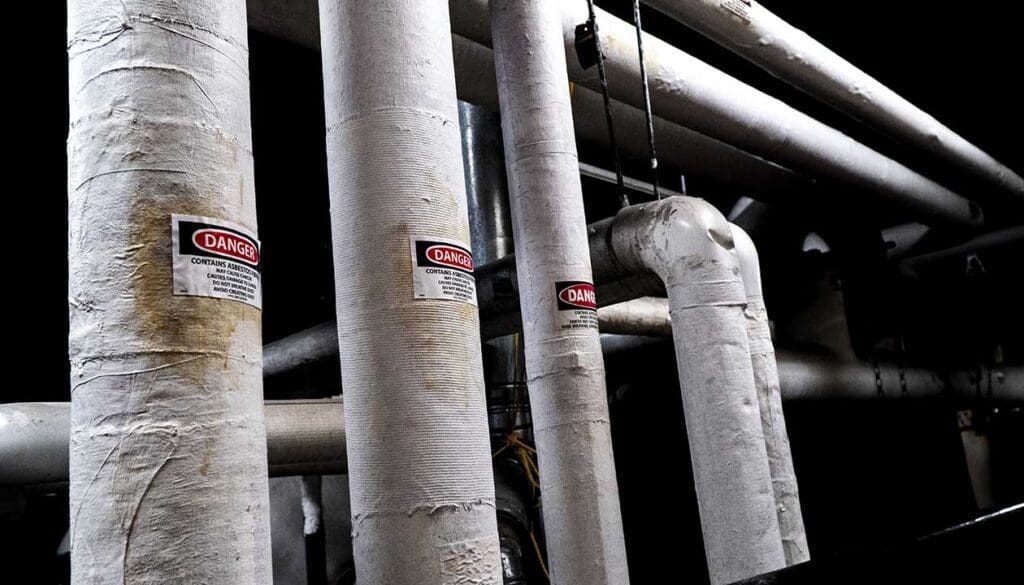
If you or someone you love were harmed by exposure to asbestos, you can follow in the footsteps of the thousands of victims who have already come forward to demand accountability and compensation from the companies and manufacturers responsible. Here’s what you should know about asbestos exposure and your legal options.
Mesothelioma & Asbestos: What’s the Connection?
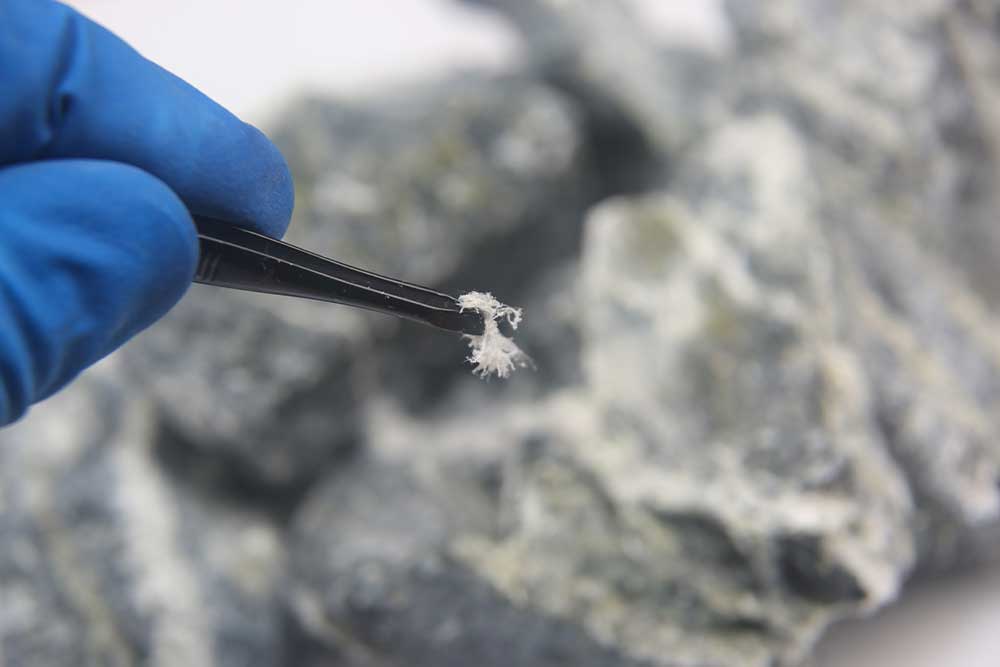
Scientists connected asbestos to disease as early as 1918. Asbestosis, a chronic lung disease caused by inhaling asbestos fibers, was among the earliest recognized illnesses linked to asbestos. Regulations were put in place in the United States by the 1930s in an effort to protect workers. However, mesothelioma wasn’t linked to asbestos exposure until the 1940s, when a study of German asbestos workers revealed a link between asbestosis and cancers affecting the lungs, including mesothelioma.
By the 1960s, researchers were drawing clearer lines between asbestos exposure and mesothelioma specifically. A paper published in the British Journal of Medicine documented 33 cases of pleural mesothelioma among residents in South Africa’s Cape Province. All but one of them had been exposed to asbestos.
Another study of 600 workers from New York-area asbestos unions showed a lung cancer mortality rate that was 6.8 times higher than the general population. It noted that the occurrence of pleural mesothelioma was “strikingly high” in this group.
In the decades since, asbestos has been identified as a known human carcinogen by the U.S. Department of Health and Human Services, the Environmental Protection Agency, and the International Agency for Research on Cancer.
Beyond mesothelioma, asbestos is also a confirmed cause of lung cancer — a distinct disease that affects the lung tissue itself rather than the lining. The connection is particularly significant for those who also smoked: research has shown that asbestos exposure combined with tobacco use can raise lung cancer risk dramatically compared to either factor alone. This means that even former smokers with a history of occupational asbestos exposure may have a strong legal basis for a claim. Many workers who were exposed before the dangers were widely regulated are now receiving lung cancer diagnoses decades later, well within the legal window to file a claim.
More on Asbestos Exposure
Asbestos is a group of naturally occurring, fibrous minerals with unique insulating properties. These properties are what made asbestos a popular choice for construction materials and other industrial products. Asbestos fibers are also strong and naturally resistant to heat, so they were incredibly useful in building materials, such as flooring, ceilings, roofing and even automotive parts. Construction sites, manufacturing plants, refineries, and shipyards are just a few places where exposure could happen.
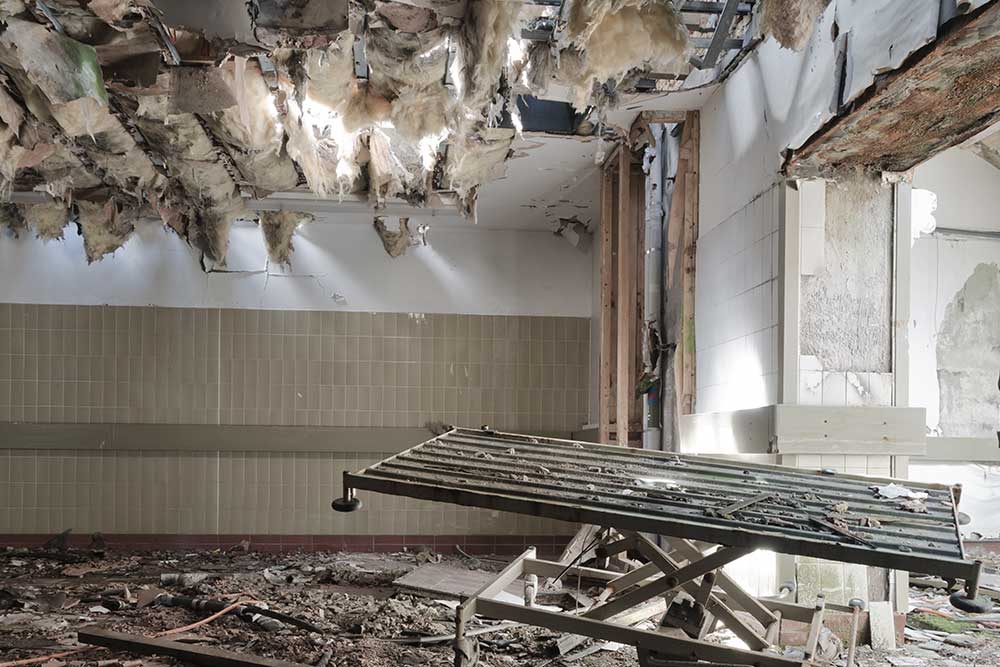
Exposure mainly occurs when a person inhales asbestos fibers in the air they breathe. So, while exposure could happen during an activity that involves using asbestos-containing materials, like construction or mining, it can also occur more indirectly. For example, when older buildings are demolished or renovated, or when materials containing asbestos break down, asbestos can be released into the air. A less direct but still serious risk is secondary exposure. This most often affects people living with someone who regularly works around asbestos. Fibers can be carried home on clothing or skin, exposing household members and potentially leading to illness.
Why Is Asbestos Harmful?
When asbestos is used in manufacturing or mining, the fibers are broken up and can create a fine dust. If inhaled or swallowed, the dust will settle in the lungs or stomach, causing an irritation that could eventually lead to mesothelioma. Researchers don’t fully understand what causes this to happen, or why it takes so long for mesothelioma to develop after asbestos exposure.
When a person is exposed to asbestos, it can take anywhere from 20 to 60 years or more for them to develop mesothelioma. And, unfortunately, the risk of getting mesothelioma does not lessen over time. Once you are exposed, you may carry a lifelong risk of developing mesothelioma.
Mesothelioma Lawsuit History
Despite decades of warnings from health experts and countless lives lost, lawsuits against asbestos companies didn’t begin until the 1960s. But when the first dominos began to fall, the momentum was unstoppable.
The First of Many Successful Mesothelioma Claims
While many lawsuits had been filed in years prior, the first successful asbestos lawsuit linked to mesothelioma was won in 1973 in the Eastern District of Texas. In Borel v. Fibreboard Paper Products Corporation et al., Clarence Borel filed a lawsuit against multiple asbestos insulation manufacturers. He had developed mesothelioma and asbestosis after working as an insulator for 33 years, suffering regular exposure to asbestos.
This case is considered a landmark decision for asbestos and mesothelioma litigation, setting a precedent for thousands of lawsuits that would follow against asbestos companies.
The Asbestos Industry on Trial
In Outrageous Misconduct: The Asbestos Industry on Trial, author Paul Brodeur describes the Borel decision as triggering “the greatest avalanche of toxic-tort litigation in the history of American jurisprudence. Some twenty-five thousand lawsuits were brought over the next decade as word spread that asbestos manufacturers could be held strictly liable under the law.”
That avalanche continued over the next 20 years as the number of personal injury claims based on asbestos exposure grew exponentially. Many were multi-party, class action, or mass tort suits, where attorneys representing multiple plaintiffs made claims against multiple defendants.
A study published by the Rand Institute for Civil Justice in 2005 describes asbestos litigation as “the longest running mass tort in the United States.” At that time, more than 730,000 plaintiffs had filed personal injury claims and $70 billion had been paid by defendants and insurers, though not all of them were brought by victims who developed mesothelioma. At least 8,400 entities had been named as defendants through the year 2002, and at least 73 companies had filed bankruptcies into 2004.
Another study published in 2011 reported that, over the last three decades, asbestos companies who were forced to file bankruptcy set up a total of 56 trust funds for future victims.
Asbestos Trust Funds
When faced with an onslaught of lawsuits brought by victims seeking compensation for the pain and suffering they endured, dozens of asbestos companies were left with little choice but to file for Chapter 11 bankruptcy.
Fortunately, future victims and their families have a path toward justice through asbestos trust funds, sometimes referred to as mesothelioma trust funds. These trusts are established to provide compensation for mesothelioma and lung cancer victims and others injured by asbestos exposure, long after the asbestos company itself is shuttered.
How Do Victims File Asbestos Claims?

Depending on when and how someone was exposed to asbestos, and the fate of the company or companies responsible for the exposure, mesothelioma and lung cancer victims have a few options for filing a claim.
Trust funds: If the company responsible for the exposure has filed for bankruptcy, the victim will file a claim through an asbestos trust fund.
Bankruptcy court: Sometimes, a company may be in the process of filing bankruptcy due to asbestos claims. In these instances, a victim would file their claim in bankruptcy court.
Standard lawsuit: If the company is still in operation and not in the process of filing bankruptcy, a victim can file a lawsuit directly against the company.
In many cases, asbestos victims were exposed to asbestos over long periods of time, often at multiple worksites. For these individuals, there is no one point of exposure, and multiple entities may be responsible for their illness or death. In these instances, they may file multiple claims through all the applicable paths above to better ensure they receive the compensation they’re owed.
It’s not uncommon to hear of victims who file 20, 30 or even 100 different claims against multiple companies they’ve worked for, as well as companies that supplied asbestos or material containing asbestos to the company they worked for.
What Makes Asbestos So Harmful?
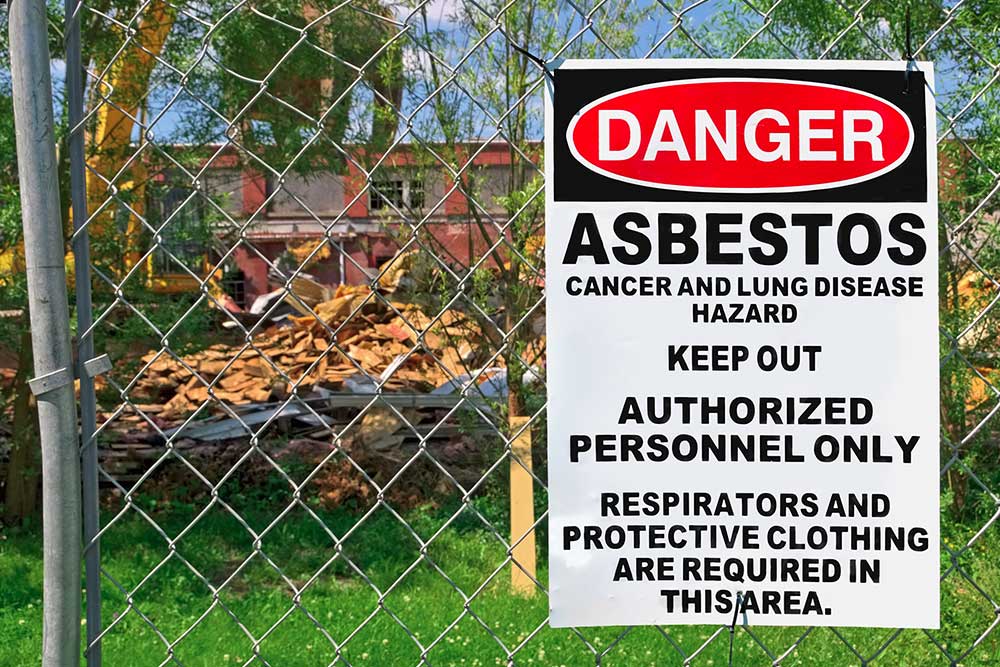
When asbestos is used in manufacturing or mining, the fibers are broken up and can create a fine dust. If inhaled or swallowed, the dust will settle in the lungs or stomach, causing an irritation that could eventually lead to mesothelioma. Researchers don’t fully understand what causes this to happen, or why it takes so long for mesothelioma to develop after asbestos exposure.
When a person is exposed to asbestos, it can take anywhere from 20 to 60 years or more for them to develop mesothelioma. And, unfortunately, the risk of getting mesothelioma does not lessen over time. Once you are exposed, you may carry a lifelong risk of developing mesothelioma.
Who Is at Risk for Developing Mesothelioma?
Because asbestos is the only known cause, those with a personal history of exposure are at the greatest risk for developing terminal mesothelioma. Those with the heaviest exposure, like construction site or shipyard workers, carry the greatest risk. However, it’s possible to spread that risk to others. Living with someone who works with asbestos can lead to illness. A person can carry stray asbestos fibers home on their skin and clothes. Members of the household can be exposed to the fibers over many years, putting them at risk for mesothelioma and lung cancer.
Finally, family history plays a role. If a parent, sibling or child has mesothelioma, you may have an increased risk of this disease.
Symptoms of Mesothelioma
As mentioned, mesothelioma comes with a long latency period–up to 60 years–during which there may be no symptoms. When symptoms do surface, they’ll vary depending on where the cancer occurs.
Pleural mesothelioma, which affects the tissue that surrounds the lungs, symptoms include:
- Chest pain
- Painful coughing
- Shortness of breath
- Unusual lumps of tissue under the skin on your chest
- Unexplained weight loss
Peritoneal mesothelioma, which occurs in tissue in the abdomen, symptoms include:
- Abdominal pain
- Abdominal swelling
- Nausea
- Unexplained weight loss
People experiencing any worrying signs or symptoms of mesothelioma should see a doctor as soon as possible–especially if they know they’ve been exposed to asbestos.
Symptoms of Asbestos-Related Lung Cancer
Asbestos-related lung cancer shares a similarly long latency period and can present with overlapping symptoms, making medical evaluation essential for an accurate diagnosis.
Asbestos-related lung cancer symptoms include:
- Difficulty breathing or shortness of breath
- Persistent cough
- Chest pain or tightness
- Unexplained weight loss
- Persistent fatigue or weakness
- Persistent hoarseness
- Wheezing
- Swelling of the face or arms
- Difficulty swallowing
- Fever or night sweats
Who Can File a Asbestos Lawsuit?

In general, anyone diagnosed with mesothelioma or asbestos-related lung cancer after working with asbestos or products containing asbestos can file a lawsuit. Both conditions qualify for the same legal pathways — personal injury lawsuits, asbestos bankruptcy trust fund claims, and bankruptcy court filings.
To have a qualifying case, victims need to present proof of injury — a diagnosis — and a documented history of exposure.
If you received a mesothelioma diagnosis, Join the Many can connect you with a reputable law firm specializing in these cases immediately. If your diagnosis is asbestos-related lung cancer, our partner firms are currently accepting cases that meet the lung cancer qualification criteria. They can also provide you with resources on all products ever created that contain asbestos, along with manufacturer names and dates, to help you establish a clear history of exposure.
Do You Qualify for an Asbestos Lung Cancer Claim?

Asbestos lung cancer cases have a distinct set of qualifying criteria. If you or a family member has been diagnosed with lung cancer and believe occupational or household asbestos exposure may be the cause, review the criteria below to see if you may have a claim.
| Criteria | Requirement |
|---|---|
| Not already represented | No current attorney — prior non-malignancy claims exempt from this rule |
| Exposure location | Asbestos exposure must have occurred in the United States |
| Diagnosis location | Not restricted to U.S. — international diagnosis accepted |
| Date of birth | Born in or before 1968 |
| Exposure duration | At least 5 cumulative years in a qualifying industry or role before approximately 1982 (primary or secondary; non-consecutive years count) |
| Diagnosis | Confirmed lung cancer diagnosis within the past 5 years |
| If deceased | Date of death within the past 3 years |
| Retainer authority | Injured person, or — if deceased — surviving spouse, child, or estate executor |
Qualifying industries and occupational roles include:
- Industrial manufacturing: steel mills, petroleum refineries, chemical plants, power plants, shipyards, paper mills, railroad work
- Construction and trades: union tradesman, professional construction, remodeling, carpentry, professional automotive mechanics, auto workers
- Skilled trades: steamfitters, pipefitters, bricklayers, electricians, insulators, laborers, steelworkers, plumbers, boilermakers
- Military: Navy service prior to 1982
Secondary exposure also qualifies. If you lived with a family member who worked in one of the above industries or roles before 1982 for a combined total of 5 or more years, you may have a claim even if you were never directly employed in those industries.
Important: Each state enforces a statute of limitations for asbestos lung cancer claims, and the window to file can vary significantly. Most states apply a discovery rule that gives you time from the date of diagnosis (not the date of exposure) to file. Given the long latency period between exposure and diagnosis, many people are still within the window to act. The sooner you begin, the more options you have.
The Asbestos Verdicts So Far

There are dozens of asbestos funds in the United States that contain billions in potential settlement money for asbestos victims. Generally, anyone who was diagnosed with mesothelioma or asbestos-related lung cancer after asbestos exposure is eligible to file a claim, either through these trusts, bankruptcy court, or directly against the company responsible.
To date, the largest mesothelioma/asbestos verdict recorded is $250 million, awarded in 2003 to a man who worked for U.S. Steel for 30 years. The amount was later settled for $50 million. That same year, a Pennsylvania man was awarded $47 million in his claim against KeySpan, the company that owns the power plants he used to work for.
Other outcomes include:
- In 2020, a drywall worker diagnosed with mesothelioma received a $13.6 million verdict and $75,000 in settlement money in Washington state, saying he developed cancer after working with asbestos-containing material on the job.
- In 2018, a shipyard worker was awarded $6.5 million after a jury determined his mesothelioma diagnosis resulted from exposure to asbestos while working with gasket materials at a naval shipyard.
- In 2018, the family of a mechanic in California received $630,000 to resolve a wrongful death suit after claiming their loved one developed cancer after being exposed to asbestos in brakes, clutches, and gaskets.
- In 2017, a jury awarded a New York mechanic $75 million when he claimed he developed mesothelioma from working with asbestos gaskets in car engines.
- In 2014, the surviving family of a factory worker in Texas was awarded $18.6 million. The deceased worked in a tire factory for 30 years and was exposed to machinery that contained asbestos as well as pipe insulation throughout the factory.
- In 2006, a retired police officer and former brake specialist won a $25 million verdict from DaimlerChrysler, claiming he developed mesothelioma from exposure to the company’s car brakes.
Asbestos Lawsuit Settlement Amounts

Every asbestos case is extremely unique, so there is no fixed settlement amount tied to the litigation. Many considerations go into a verdict, like age, health conditions, and the ability of the plaintiff and their representation to prove how often they were exposed to asbestos. All of this and more affects the final outcome.
Factors That Affect the Settlement Amounts
While each case is very different from the next, there are some common factors we can point to that help us better understand potential settlement amounts.
Previous, ongoing, and future medical costs
Plaintiffs who were themselves exposed, or had a family member who was exposed, to asbestos or products containing asbestos may be eligible to recover the costs of past, present, and even expected future medical bills related to their mesothelioma or lung cancer diagnosis. It’s also reasonable to expect the long-term physical and emotional suffering that happens as a result could lead to higher-than-usual medical bills. All this factors into a settlement decision.
Lost income
Suffering from an asbestos-related disease after asbestos exposure can cause victims to be unable to work and provide for their families, often for years after their initial diagnosis. Although rare, some plaintiffs can recover from their illness, it’s possible they aren’t able to work in the same capacity as before. In some cases, victims are left completely disabled. In others, an individual who cared for a sick and dying family member may have lost work and wages as a result. Settlements may account for this.
Pain and suffering damages
Prolonged illness and, of course, the death of a loved one can cause severe emotional and mental distress. This is more difficult to quantify in court, as there often are no bills or receipts to look to. But these factors are no less important and worthy of restitution.
Loss of joy of living
If a mesothelioma or lung cancer diagnosis renders a victim unable to enjoy life like they once did, perhaps because they are now permanently disabled as a result, they can pursue damages to compensate for the ways the disease has affected their life.
Key Takeaways
Decades of precedent tell us that victims of mesothelioma and asbestos-related lung cancer caused by asbestos exposure stand a strong chance of successfully claiming compensation from the companies responsible. If you or someone you love was exposed to asbestos and developed mesothelioma or lung cancer, it’s critical to seek legal help. Join the Many can review your case details for free to help you understand if you may qualify for compensation. Then, we can carefully match you with the best law firm for your situation. Get started with your free case evaluation today.
Join the Many is here to provide a free, no obligation case review to determine if you may be eligible for a settlement. If you are, we’ll carefully match you with the best attorney for your case. There are no legal fees unless you win compensation. Contact us today to get started.