Where the Litigation Stands
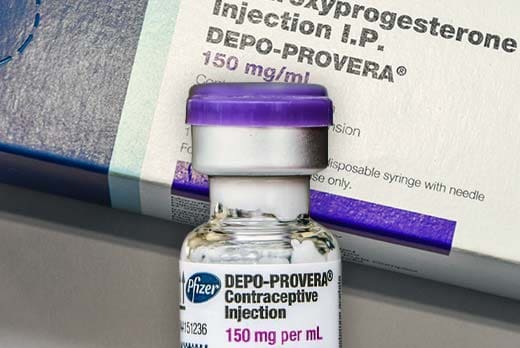
The federal Depo-Provera cases are gathered before a single judge, M. Casey Rodgers, in the U.S. District Court for the Northern District of Florida, where they were consolidated into a multidistrict litigation (MDL 3140) on February 7, 2025.
The litigation has grown quickly. As of the most recent court count, there were 3,467 cases on file, representing 3,790 women. In June 2026, Pfizer and the lawyers representing those women reached a global settlement in principle. The terms have not been made public, and both sides are still finalizing the details.
At the center of every case are a few shared questions: whether Depo-Provera causes meningioma, whether Pfizer knew about the risk, whether the company failed to adequately warn patients and doctors, and whether it failed to promote a safer alternative.
Note: This is a multidistrict litigation, not a class action. Each woman keeps her own individual case and her own potential recovery. Cases are grouped only to make shared pretrial work, like discovery and expert testimony, more efficient.
The first case that had been set for trial was Toney v. Pfizer.
The Science Behind the Claims

The lawsuits rest on a growing body of research linking the injection to meningioma.
The strongest U.S. evidence comes from a 2025 study in JAMA Neurology by researchers at Case Western Reserve University and the Cleveland Clinic. Using records from more than ten million American women (including 88,668 who received the injection) they found about 2.4 times the risk of a meningioma diagnosis among women who used it, compared with matched women who did not. A 2026 meta-analysis found more than a threefold higher risk with two or more years of use.
The study that first drew wide attention, published in the BMJ in 2024, found that prolonged use was associated with a roughly five-fold increase in the odds of an intracranial meningioma.
Crucially, the elevated risk did not appear for hormonal IUDs or for birth control pills. The signal is specific to this injectable medication which is central to the causation argument in the litigation.
If you are currently using Depo-Provera, do not stop on your own. Talk to your doctor first, who can help you choose a safe alternative.
What Pfizer Knew, and When

The core allegation is that the evidence built for years while women in the United States were never warned.
The signals reached Pfizer directly. As early as 1997, a neurosurgeon reported to the company that Depo-Provera appeared to have accelerated a patient’s meningioma growth. The company’s own Canadian product label listed meningioma as an adverse reaction beginning in 2006. And by 2022, Pfizer had received more than 50 reports of meningioma tied to its medroxyprogesterone products.
Yet in the United States, the label carried no meningioma warning for decades.
The Warning That Came Too Late
Pfizer’s central defense is that it could not have added a meningioma warning on its own, because the FDA turned down its request. That account is worth understanding, because it is not the whole story.
On November 1, 2024, the FDA responded to Pfizer’s proposed label change and said the available observational studies “alone do not support” adding a meningioma warning. Pfizer now points to that letter as proof it was blocked from warning.
But the warning Pfizer had proposed swept across all of its hormone products at once, from low-dose oral tablets to high-dose injections, far broader than the science supported. When Pfizer went back and narrowed its request, dropping the low-dose oral products and focusing on the injections, the FDA approved a meningioma warning in December 2025.
In short: the company asked for a warning the evidence couldn’t support, was told to fix it, and — once it did — got the warning approved.
This label had changed before
Pfizer had updated this exact label before. In November 2004, the FDA and Pfizer added a black box warning (the agency’s most serious) to Depo-Provera, about significant bone mineral density loss with long-term use. The mechanism to change the label existed, and the company had used it.
Who Can File a Depo-Provera Lawsuit?

You may have a claim if you were diagnosed with a meningioma and received one or more Depo-Provera injections (or an authorized generic version) before that diagnosis.
Two things you do not need to know:
- You don’t need to know who made your shot. Most women were simply told it was “the birth control shot” or “generic Depo-Provera.” The insurance billing code is even the same for the brand and its authorized generics. A medical and pharmacy record review sorts this out.
- You don’t need to know the exact tumor type. A meningioma diagnosis qualifies, and so does a brain tumor whose type you were never told.
A few things that help your case:
- If your name has changed since you got the shots, say so. Records from years ago often list a former surname, and matching them to you is easier when your attorney has every name you’ve used.
- If you got the shots before 2004, the manufacturer question is simpler. No traditional generic version existed in the U.S. before July 28, 2004, so an injection from before then came from Pfizer or one of its authorized versions.
Some situations generally don’t qualify; for example, a meningioma diagnosed before January 1, 2000, or injections received only before 1992 when the drug reached the U.S. market. The surest way to know is a free review of your specific facts.
Is There a Deadline to File?

Every state sets a time limit for filing, usually two to three years. But the clock often does not start on the day of diagnosis — it can start when a woman knew, or reasonably should have known, that her tumor might be connected to the drug.
That distinction matters here, because for years there was no way to make the connection. A strong starting point is the FDA’s December 2025 label change, the first time a U.S. authority formally told American patients about the risk. Under that reasoning, a diagnosis from years ago may still be within the deadline today.
Because the rules vary so much from state to state, the only way to know where you stand is to have your specific dates reviewed. If you think you might be near a deadline, it’s better to ask now than to guess.
What Could a Case Be Worth?

There is no set amount, and anyone who promises you a number is guessing. What a claim may account for includes:
- Medical costs including surgery, radiation, imaging, and ongoing care
- Lost income and reduced earning capacity
- Long-term or permanent disability
- The cost of lifelong monitoring
- Pain, suffering, and diminished quality of life
Because a global settlement is still being worked out, its terms are not public, and no one can tell you today what an individual claim will resolve for. Past results do not predict any particular outcome.
How Do I File and What Happens Next?
- Free case review. You tell us about your use of the drug and your diagnosis. There’s no cost and no obligation.
- Records gathering. We help collect the medical and pharmacy records that confirm your use and your diagnosis — including which product and manufacturer, so you don’t have to.
- Threshold review. The court requires proof of use and proof of injury before a case moves forward; we make sure your file meets that requirement.
- Filing. Qualifying federal cases can be filed directly into MDL 3140.
- You stay informed. Each case remains individual. We keep you updated as the litigation moves.
Frequently Asked Questions
No. It’s a multidistrict litigation. Each woman keeps her own individual case and her own potential recovery.
Not necessarily. The filing deadline often starts when you knew or should have known of the connection — and the first U.S. warning didn’t appear until December 2025. Have your specific dates reviewed.
Yes. Most women were never told, and the billing code is the same for the brand and its authorized generics. A records review determines this.
It costs nothing unless we win your case. Our team works on a contingency basis—meaning we don’t get paid unless you do. Your case review is completely free.
Trusted Sources on Meningioma
- Fact Sheet – Central Brain Tumor Registry of the United States (CBTRUS)
- Counseling Patients on Birth Control Injection and Meningioma – American College of Obstetricians and Gynecologists (ACOG)
- Depo-Provera CI Prescribing Information – U.S. Food and Drug Administration (FDA)
- Use of progestogens and the risk of intracranial meningioma – BMJ
- Depot Medroxyprogesterone Acetate and Risk of Meningioma in the US – JAMA Neurology
- Meningioma – Cleveland Clinic
- Meningioma: Diagnosis and Treatment – National Cancer Institute (NCI)
Join the Many is here to provide a free, no obligation case review to determine if you may be eligible for a settlement. If you are, we’ll carefully match you with the best attorney for your case. There are no legal fees unless you win compensation. Contact us today to get started.